
Professional Tile & Grout Cleaning and Restoration
Deep cleaning and restoration services for commercial tile floors, walls, and grout lines throughout Dallas-Fort Worth. Our specialized equipment and techniques remove years of embedded dirt, grease, and stains from kitchens, bathrooms, lobbies, and high-traffic areas, restoring your tile surfaces to like-new condition while protecting them against future staining.
Service Features
High-Pressure Steam Cleaning
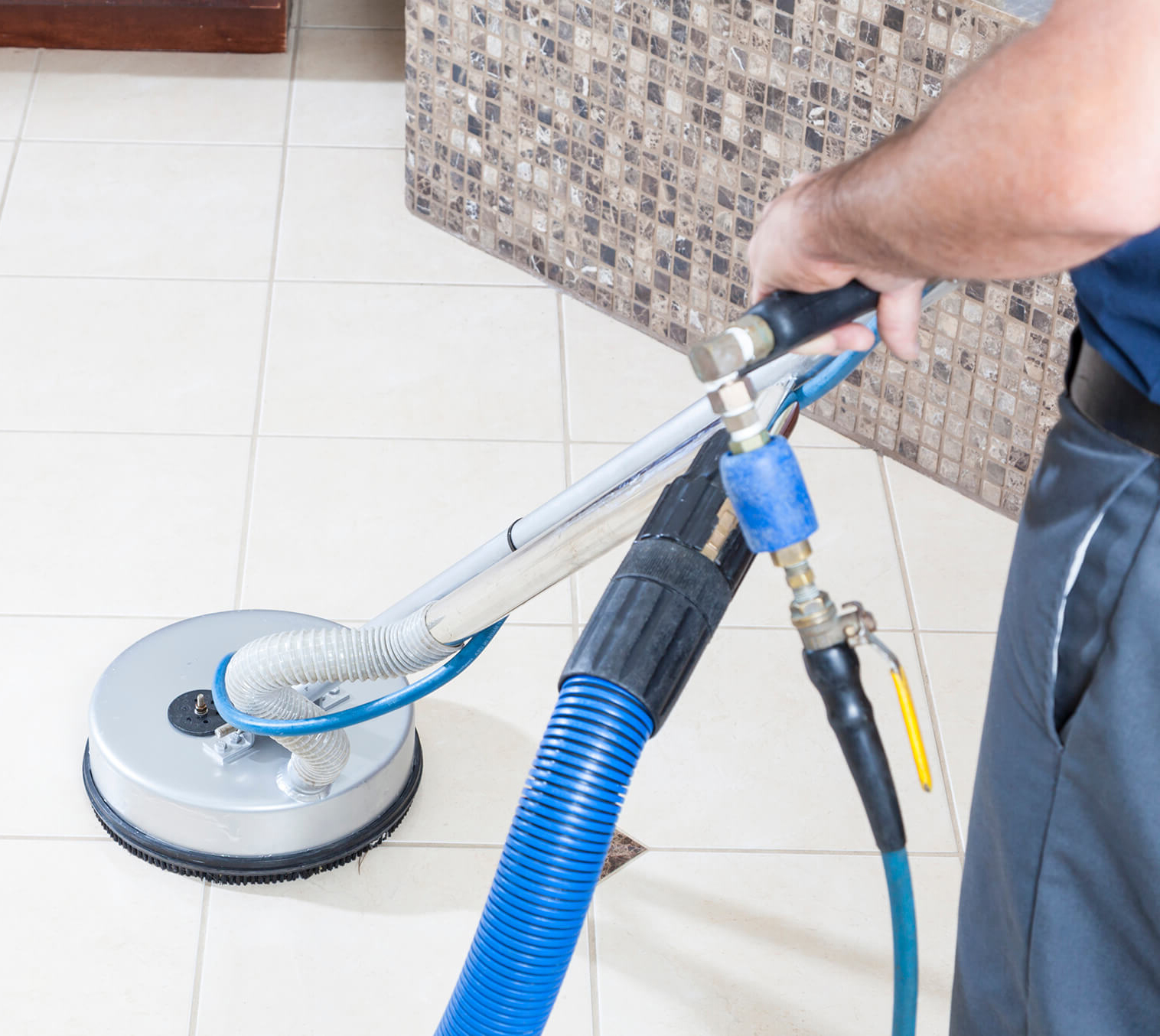
Our truck-mounted and portable systems deliver heated cleaning solution at high pressure deep into grout lines and porous tile surfaces. This process dissolves and extracts embedded soil, grease, and contaminants that mopping and conventional cleaning cannot reach, restoring original appearance.
Grout Line Deep Extraction
Grout is porous cementitious material that readily absorbs soil, spills, and contaminants. Our specialized tools and extraction equipment aggressively clean grout lines, removing years of accumulated dirt and stains. The result is dramatically cleaner, more uniform grout color throughout your tiled areas.
Tile Surface Restoration
Ceramic, porcelain, and natural stone tile surfaces receive thorough cleaning using appropriate methods for each material. We remove soap scum, hard water deposits, grease, and ground-in dirt to restore tile luster and appearance. Different tile types receive specific treatments to avoid damage while achieving optimal results.
Grout Sealing & Protection
Following cleaning, we apply premium penetrating sealers that protect grout from future staining and make ongoing maintenance easier. Sealers create a protective barrier that repels water, oil, and soil while allowing grout to breathe. This investment significantly extends the time before grout again requires deep restoration.
Stain & Mildew Removal
Stubborn stains from rust, grease, organic matter, and mildew receive specialized treatment with professional-grade stain removers. We identify stain chemistry and apply appropriate solutions to break down and remove discoloration. Mildew and mold are treated with antimicrobial agents that eliminate growth and help prevent recurrence.
Grout Color Restoration
When cleaning cannot restore acceptable appearance, we offer grout color sealing that uniformly changes grout color while providing stain protection. This service transforms discolored, stained grout to a fresh, consistent appearance at a fraction of the cost of re-grouting. Multiple color options allow aesthetic updates as well.
Benefits of Tile & Grout
Dramatically Improved Appearance
Clean tile and grout transforms the look of commercial kitchens, bathrooms, and public areas. Grout lines are often the limiting factor in floor appearance - even clean tiles look dirty when surrounded by stained, darkened grout. Professional restoration restores the uniform, fresh appearance that makes your facility look well-maintained and professional.
Extended Floor Life
Embedded soil and grit in grout lines acts as an abrasive that damages tile edges and wears floor finish. Regular deep cleaning removes these damaging particles while sealing protects against future penetration. This maintenance extends the functional life of your flooring investment and delays costly replacement projects.
Enhanced Hygiene & Sanitation
Grout lines in commercial kitchens and restrooms harbor bacteria, mold, and organic matter that compromise hygiene. Deep cleaning with heated solutions and extraction removes these contamination sources. Antimicrobial treatments inhibit future microbial growth. This is particularly important for food service and healthcare environments where sanitation standards are critical.
Easier Ongoing Maintenance
Sealed grout resists soiling and cleans more easily with routine mopping. Unsealed grout quickly re-soils and requires aggressive scrubbing to maintain appearance. The protection applied after professional cleaning reduces daily maintenance effort and keeps floors looking better between professional services.
Cost-Effective Alternative to Replacement
Professional tile and grout restoration typically costs 75-85% less than floor replacement while delivering dramatic aesthetic improvement. Even heavily stained grout can often be restored to acceptable appearance or color-sealed to like-new condition. This cost efficiency makes restoration an attractive option for budget-conscious facility managers.
Improved Indoor Air Quality
Dirty grout harbors mold, mildew, and bacteria that can affect indoor air quality and create musty odors. Deep cleaning removes these biological contaminants, while sealing prevents their return. The result is fresher-smelling spaces and healthier indoor environments for employees and customers.
Our Tile & Grout Process
Inspection & Material Identification
Our technician evaluates your tile type, grout condition, soiling level, and any damage. We identify whether tile is ceramic, porcelain, natural stone, or other material as this determines appropriate cleaning methods and solutions. Problem areas requiring special attention are noted.
Dry Soil Removal
Loose soil and debris are thoroughly removed through sweeping and vacuuming. This prevents mud formation when cleaning solutions are applied and ensures cleaning agents can penetrate to the soil that requires removal rather than being consumed by loose surface debris.
Pre-Treatment Application
Appropriate cleaning solutions are applied to tile and grout based on soil type and material compatibility. Alkaline cleaners break down grease and organic soil; acidic solutions address mineral deposits and rust. The pre-spray dwells to penetrate and loosen embedded contaminants.
Agitation & Deep Cleaning
Grout lines and heavily soiled areas receive mechanical agitation using specialized brushes that work cleaning agents deep into porous grout. This physical action suspends soil and ensures cleaning solution reaches all contamination. Different brush types are selected for grout width and soil severity.
High-Pressure Extraction
Heated cleaning solution is injected under pressure and immediately extracted along with suspended soil using powerful vacuum systems. This rinse-and-extract process removes cleaning residues and dissolved contaminants, leaving tile and grout clean and nearly dry. Multiple passes ensure thorough soil removal.
Sealing & Protection
Once thoroughly dry, grout lines are sealed with premium penetrating sealers appropriate for the environment - standard sealers for general areas, enhanced formulas for kitchens and food service, and antimicrobial sealers for healthcare and restrooms. Sealer is applied evenly and excess is removed from tile surfaces.
Understanding Grout Composition and Soiling
Tile Types and Their Cleaning Requirements
The Science of High-Pressure Tile Cleaning
Commercial Environments and Tile Maintenance Strategies
Frequently Asked Questions
How long does tile and grout cleaning take to complete?
Project duration depends on the area size, soil level, and tile configuration. A typical commercial restroom or small kitchen (200-400 square feet) can be completed in 2-4 hours. Larger areas like restaurant dining rooms or building lobbies require proportionally more time. We provide time estimates during our assessment. The floor requires 24 hours for complete drying and sealer curing before heavy use resumes.
How often should commercial tile floors be professionally cleaned?
High-traffic commercial kitchens typically need professional cleaning quarterly to semi-annually due to heavy grease exposure. Restaurant dining rooms and retail spaces generally benefit from annual deep cleaning. Office building lobbies and restrooms may need service every 12-18 months. Sealed grout extends these intervals by resisting re-soiling. We assess your specific traffic and usage patterns to recommend an appropriate maintenance schedule.
Will cleaning remove all stains from grout?
Professional cleaning removes most common soil and stains from grout, but some permanent discoloration may remain. Oil-based stains, rust, deeply embedded organic matter, and stains present for extended periods may not completely eliminate. When cleaning cannot achieve acceptable results, we offer grout color sealing that provides a fresh, uniform appearance by coating grout with a pigmented sealer available in multiple colors.
What's the difference between clear sealer and color sealer?
Clear penetrating sealers protect grout from staining without changing its appearance. They're invisible and appropriate when grout color is acceptable but protection is needed. Color sealers (also called grout stains or colorants) coat grout with a pigmented acrylic that changes the color while providing stain protection. Color sealing is ideal when grout is permanently stained, when a color change is desired, or when the most dramatic transformation is needed. Both provide protection; color sealer offers more aesthetic enhancement.
Can you clean and seal natural stone tile like marble or travertine?
Yes, but natural stone requires specialized care different from ceramic and porcelain tile. Stone is more porous and sensitive to acidic and alkaline cleaners that can etch or damage the surface. We use pH-neutral cleaning agents specifically formulated for natural stone. Sealing is particularly important for stone to prevent staining. Our technicians are trained to identify stone types and apply appropriate methods that clean effectively while protecting these more delicate materials.
How long does grout sealer last?
Sealer longevity depends on traffic level, cleaning methods, and environmental exposure. In typical commercial environments, professional-grade penetrating sealers last 1-3 years before reapplication is needed. High-traffic areas, aggressive cleaning chemicals, and heavy water exposure reduce sealer life. Color sealers typically last 5+ years when properly maintained. We recommend annual inspection to assess sealer condition, with reapplication when water no longer beads on grout surfaces.
Related Services
Carpet Cleaning
Deep carpet cleaning for offices and commercial spaces using hot water extraction methods.
Floor Polishing
Professional floor polishing for retail spaces to restore shine and protect surfaces.
Restroom Sanitation
Deep cleaning and disinfection services for commercial restrooms and washrooms.
Mold Remediation
Safe mold and mildew removal and prevention for commercial buildings.
Ready to Experience the Difference?
Contact us today for a free consultation and customized quote for tile & grout.
services planning guide
How to plan commercial tile grout restoration for a commercial facility in Dallas
Commercial Cleaning Services of Dallas uses the following planning framework to help property managers and business owners turn a request for commercial cleaning and janitorial service into a scope that can be walked, priced, scheduled, and checked. It is designed for practical comparison and does not replace site-specific safety, material, vendor, or regulatory requirements.
Define the Work Before Pricing It
A commercial scope should distinguish appearance cleaning from hygiene work and asset maintenance. Dust removal, disinfection, floor finish care, glass restoration, and debris control solve different problems, use different processes, and often belong on different frequencies. For multi-tenant or mixed-use properties, commercial tile grout restoration should be divided by responsibility zone. Common areas, tenant suites, back-of-house spaces, loading areas, public restrooms, and restricted rooms can then receive schedules and approval rules that match their actual use. Commercial Tile Grout Restoration should begin with a written definition of the rooms, surfaces, fixtures, equipment boundaries, and access conditions included in the work. A useful scope separates routine tasks from periodic restoration so the facility manager can see what happens on every visit and what occurs only on a planned cycle. A walkthrough for commercial tile grout restoration is most productive when the decision-maker identifies the spaces that create complaints, the areas that carry the most traffic, and the tasks the current program misses. Those observations turn a generic checklist into a practical scope tied to the way the property is actually used.
Build the Schedule Around Operations
For Dallas–Fort Worth properties, travel windows and building access can materially affect the usable service period. A realistic schedule accounts for security handoffs and operating deadlines rather than promising a start time that leaves too little time to finish. Daytime and after-hours service solve different operational problems. Day porter coverage manages visible conditions while people are present; after-hours crews complete disruptive or time-intensive tasks when work areas can be accessed safely and thoroughly. A dependable plan includes a method for reporting schedule changes. The facility contact should know whom to notify, how much lead time is needed, and how missed or added visits affect the monthly program before an urgent request arises. Facilities with irregular occupancy should use a flexible service calendar. Seasonal traffic, events, construction phases, tenant move-ins, inventory cycles, and weather can all create temporary cleaning demand that a rigid schedule will miss.
Make Quality Control Observable
The account review should examine service requests, inspection findings, occupancy changes, supply use, and upcoming facility events. That review keeps the program aligned with the property instead of allowing an old scope to continue after the building changes. Before-and-after documentation is especially valuable for one-time or restorative commercial tile grout restoration. It establishes the starting condition, records the completed result, and helps the facility manager decide whether a recurring maintenance cycle would prevent the same buildup. A single complaint channel prevents service issues from disappearing between building occupants, property management, and the cleaning crew. Requests should be logged with the location, task, urgency, and desired completion time so the response can be verified. Quality control works best when it is tied to the site-specific scope. A supervisor can inspect completion against named rooms and outcomes, record exceptions, assign corrections, and identify patterns that require a change in staffing, tools, or frequency.
Match Methods to Materials and Risk
Surface identification matters because a process that works on one material can damage another. Before commercial tile grout restoration, confirm flooring, stone, coated metal, glass treatments, upholstery, painted surfaces, and manufacturer restrictions that affect chemistry or agitation. Dwell time and physical removal are central to effective cleaning. A product cannot perform as intended if it is wiped away immediately, and loosened soil still needs to be removed with clean tools rather than redistributed across the surface. Consumable supplies deserve their own responsibility list. Soap, paper products, liners, dispensers, batteries, air fresheners, and specialty items may be client supplied, contractor supplied, or billed separately, but the agreement should not leave that question open. For sensitive or newly installed materials, a small test area can prevent expensive mistakes. The service plan should identify who approves the test result before broader cleaning or restoration proceeds.
Use the Walkthrough to Build the Scope
Ask department leads or regular occupants where cleaning failures are most visible. Facility managers often know the formal complaints, while daily users can identify recurring issues such as neglected corners, supply shortages, or timing conflicts. The walkthrough should follow the facility’s traffic pattern from entrances through work areas, restrooms, support rooms, and exits. This reveals where soil enters, where it concentrates, and which tasks must be completed in a particular order. If the requested commercial tile grout restoration includes restorative work, identify the difference between a first-service reset and ongoing maintenance. Startup work may require additional labor that should not be hidden inside the recurring visit price. Bring a current floor plan, operating schedule, and list of known problem areas to the walkthrough. These details help Commercial Cleaning Services of Dallas organize commercial tile grout restoration around actual conditions instead of estimating from square footage and a short phone description.
Put the Service Agreement in Writing
Pricing should state whether it is monthly, per visit, hourly, or project based and should identify the assumptions behind it. Changes in occupied square footage, frequency, access time, or task scope need an agreed method for repricing. Cancellation, renewal, and notice terms deserve the same attention as the cleaning checklist. A facility manager comparing proposals should understand the initial term, renewal method, price-review process, and the notice required to change or end service. Service-level expectations should be realistic and observable. A promise of “perfect cleaning” is less useful than response times, inspection routines, named completion outcomes, and an escalation process for repeated deficiencies. A commercial cleaning agreement should attach or reproduce the approved scope, frequency, service window, periodic task calendar, supply responsibilities, access rules, and communication contacts. The written detail protects both the property and the service team.
Plan for Dallas Facility Conditions
Properties across Dallas–Fort Worth vary widely in access, occupancy, and operating schedule. A downtown office, suburban medical suite, industrial building, retail center, and hospitality property should not receive the same labor plan simply because their square footage is similar. Dallas facilities contend with long cooling seasons, tracked-in dust, pollen, severe-weather debris, and rapid development activity. Those conditions can influence entry cleaning, high dusting, floor care, glass maintenance, and the timing of periodic deep work. Commercial properties in the region frequently combine offices, warehouses, showrooms, food service, or public-facing areas under one address. Zoning the scope by use keeps the cleaning method appropriate for each part of the building. Storm seasons can create short-notice needs around entrances, exterior glass, tracked moisture, construction material, and debris. A recurring account should know how to request work outside the normal scope and whether priority response is available.
Compare Providers on More Than Price
Consider the cost of under-scoping. Persistent complaints, damaged finishes, emergency restoration, staff time spent supervising the vendor, and repeated provider changes can cost more than a properly designed recurring program. A pilot or structured startup can be useful when the facility is complex or the current condition is uncertain. Define what will be evaluated, how long the evaluation lasts, and what information determines the permanent scope. Review the proposal for vague language. Terms such as “as needed,” “regularly,” and “periodically” should be converted into frequencies, triggers, or approval rules before the agreement is signed. Ask each provider to explain staffing assumptions, visit length, supervision, equipment, and the process for covering absences. The answer reveals whether the proposal is an operating plan or simply a price attached to a task list.
Start, Measure, and Adjust the Program
Periodic tasks should be placed on a calendar at startup. Floor work, carpet extraction, glass detailing, vent cleaning, high dusting, pressure cleaning, and other rotating services are easier to budget when dates are planned. The first visit should not be treated as an ordinary maintenance visit when buildup already exists. Startup cleaning establishes a maintainable baseline and gives the crew a realistic view of the time required for future service. After the first service cycle, compare actual labor and facility condition with the proposal assumptions. If the original scope was inaccurate, adjust it openly rather than expecting quality to survive an unrealistic workload. A stable program still needs review after renovations, staffing growth, seasonal traffic, operating-hour changes, or new equipment. Each change can alter soil load, access, or the time available for commercial tile grout restoration.
Bring to the walkthrough
- Approximate square footage, floor plan, and operating hours
- Current frequency, known complaints, and priority areas
- Flooring and surface notes, restricted rooms, and access rules
- Desired start date, budget constraints, and approval contacts
Expect in a written proposal
- Task scope by zone and visit frequency
- Service windows, periodic work, and supply responsibility
- Quality checks, communication, and correction procedures
- Pricing assumptions, exclusions, and change-order rules