
Professional Window Cleaning for Storefronts & Ground-Level Properties
Expert window washing services for retail storefronts, restaurants, offices, and ground-level commercial properties throughout Dallas-Fort Worth. Our skilled technicians deliver streak-free, crystal-clear results using professional techniques and eco-friendly solutions that enhance curb appeal, increase natural light, and create welcoming environments for customers and employees.
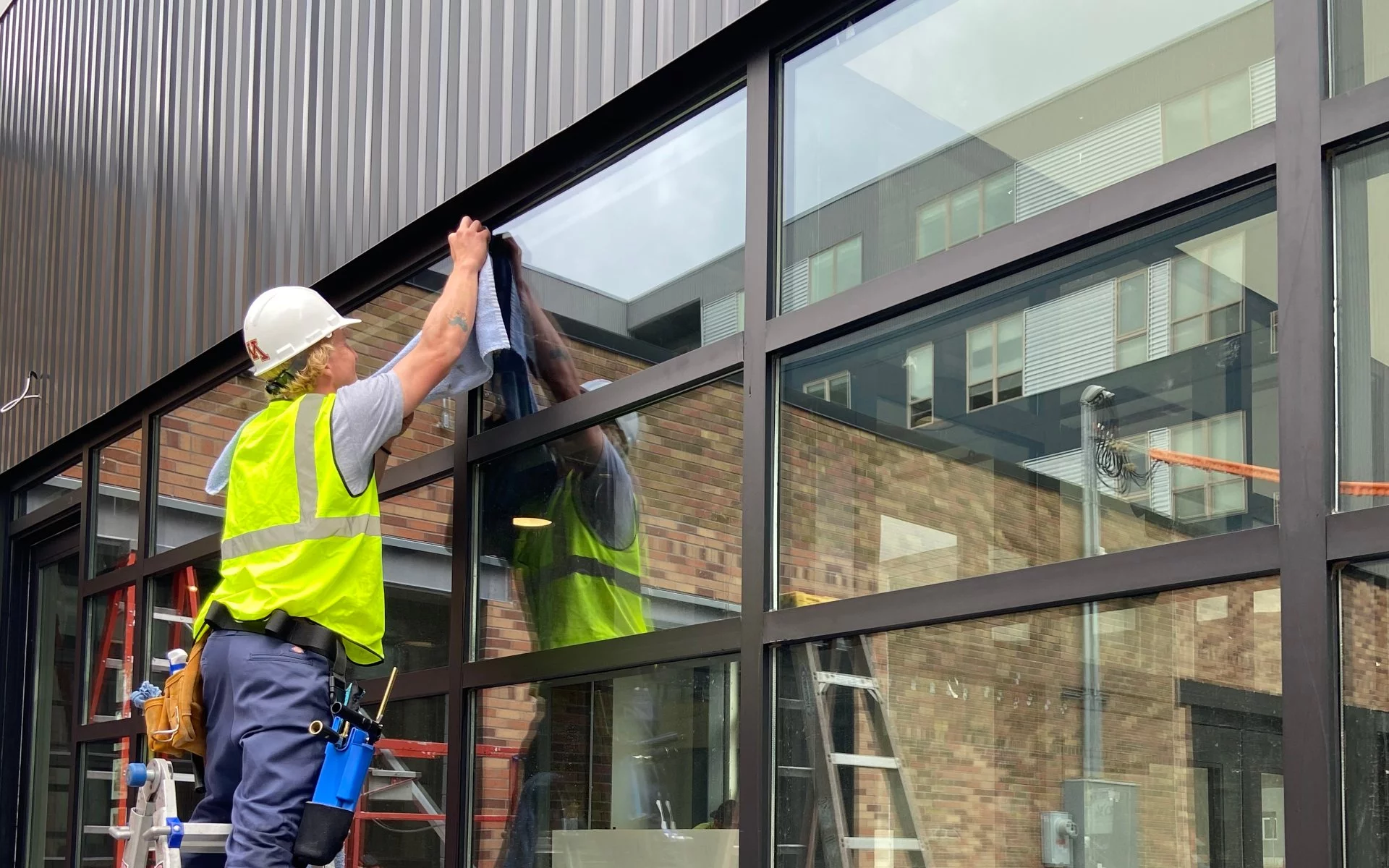
Service Features
Interior & Exterior Cleaning
Complete window cleaning service addressing both interior and exterior glass surfaces for a truly pristine result. We clean windows from both sides to eliminate all dirt, fingerprints, and film buildup, ensuring maximum clarity and light transmission throughout your space.
Streak-Free Squeegee Technique
Our technicians employ professional-grade squeegees with precision rubber blades to achieve flawless, streak-free results. The proper squeegee technique removes all cleaning solution and dissolved soil in a single pass, leaving glass perfectly clear without the streaks and lint common with amateur cleaning methods.
Frame & Sill Detailing
Window cleaning extends beyond the glass to include frames, tracks, and sills. We remove accumulated dirt, debris, and cobwebs from these areas that detract from window appearance and can cause operational issues. This comprehensive approach delivers a completely refreshed look.
Screen Removal & Cleaning
Window screens trap significant dust and dirt that affects air quality and window appearance. We carefully remove screens, clean them with appropriate solutions, and reinstall them properly. Clean screens improve airflow, visibility, and the overall finished appearance of your windows.
Hard Water Stain Removal
Mineral deposits from sprinklers and environmental exposure create stubborn hard water stains that standard cleaning cannot remove. We use specialized acidic solutions and polishing compounds to dissolve and remove these deposits, restoring glass clarity that has been dulled by mineral buildup.
Scheduled Maintenance Programs
Maintain consistently clean windows year-round with customized maintenance schedules. Regular service prevents buildup that becomes harder to remove over time, ensures your business always presents its best appearance, and often reduces per-visit costs compared to infrequent deep cleaning.
Benefits of Window Washing
Enhanced Curb Appeal & First Impressions
Clean windows are one of the most noticeable elements of building appearance. Sparkling windows signal attention to detail and quality that customers associate with your business. For retail stores especially, pristine windows invite shoppers inside and create positive first impressions before they ever enter your door.
Increased Natural Light & Energy Savings
Dirty windows significantly reduce natural light transmission, forcing increased reliance on artificial lighting. Clean windows allow maximum daylight penetration, creating brighter, more welcoming spaces while reducing electricity costs. Studies show clean windows can increase visible light transmission by 20% or more.
Extended Window Lifespan
Environmental contaminants including acid rain, hard water minerals, and pollution residue can etch and damage glass over time. Regular professional cleaning removes these harmful substances before they cause permanent damage, protecting your window investment and avoiding costly replacement.
Improved Employee Productivity & Mood
Natural light significantly impacts employee wellbeing, mood, and productivity. Research demonstrates that workers in daylit environments report better health, higher satisfaction, and increased productivity. Clean windows maximize these benefits by ensuring unobstructed natural light reaches interior workspaces.
Better Product Visibility for Retailers
For retail stores, clean windows are essential for effective merchandise display and visual merchandising. Smudged, dirty windows obscure products and reduce the impact of window displays. Crystal-clear glass ensures passersby can see your offerings clearly, driving foot traffic and sales.
Professional Image Maintenance
In competitive business environments, every detail matters. Clean windows demonstrate that you care about your business image and the experience you provide customers and employees. This attention to facility maintenance reflects positively on your overall business quality and professionalism.
Our Window Washing Process
Site Assessment & Access Planning
We evaluate your property's window configuration, access requirements, and any special considerations. This includes identifying hard water stains, paint overspray, construction debris, or other issues requiring special treatment. We plan our approach to ensure safety and comprehensive coverage.
Area Preparation & Protection
Interior areas below windows are protected with drop cloths to prevent drips on floors and furnishings. Exterior landscaping and surfaces are protected as needed. We ensure all windows are accessible and any security systems are properly handled to prevent false alarms during service.
Screen & Hardware Removal
Window screens are carefully removed, labeled if necessary, and set aside for separate cleaning. We inspect hardware condition and note any maintenance issues such as damaged screens, broken clips, or window operational problems for your attention.
Pre-Cleaning & Spot Treatment
Loose dirt and debris are removed with brushes and scrapers. Stubborn spots, stickers, paint, and hard water stains receive specialized treatment with appropriate solvents and scrapers designed for glass to dissolve and remove contaminants without scratching.
Washing & Squeegee Finish
Professional cleaning solution is applied with applicators, agitated to dissolve soil, and then removed with squeegees using proper technique to eliminate all moisture and cleaning residue. Edges and corners are detailed with lint-free cloths to ensure no drips or streaks remain.
Final Inspection & Screen Replacement
All windows are inspected from multiple angles to ensure flawless results. Screens are cleaned, dried, and properly reinstalled. We remove all equipment and protection materials, leaving your property cleaner than we found it with sparkling windows that enhance your business appearance.
The Science of Professional Window Cleaning
Environmental Factors Affecting Window Cleanliness in Dallas
Seasonal Considerations for Window Maintenance
Window Cleaning Safety Protocols and Standards
Frequently Asked Questions
How often should commercial windows be professionally cleaned?
Frequency depends on location, building use, and environmental exposure. Retail storefronts typically benefit from monthly or bi-weekly service to maintain attractive curb appeal. Office buildings may need quarterly exterior and semi-annual interior cleaning. Restaurants and food service establishments often require more frequent service due to grease and airborne particles. Properties near highways, construction, or industrial areas need more frequent cleaning due to increased dirt exposure. We assess your specific situation and recommend an appropriate maintenance schedule.
What causes hard water stains on windows and can they be removed?
Hard water stains result from mineral deposits left when water containing calcium, magnesium, and other minerals evaporates on glass. Common sources include sprinkler systems, water runoff from building surfaces, and environmental precipitation. Fresh stains can often be removed with standard cleaning, but established mineral deposits require specialized acidic cleaners or polishing compounds to dissolve and remove the crystallized minerals. In severe cases, glass may be permanently etched and require replacement. Regular cleaning prevents mineral buildup.
Do you clean windows in bad weather?
We avoid window cleaning during rain, high winds, or freezing temperatures as these conditions prevent proper drying and create safety hazards. Light overcast conditions are actually ideal for window cleaning as they prevent rapid solution drying that can cause streaking. We monitor weather forecasts and will reschedule if conditions would compromise safety or results. For scheduled maintenance accounts, we work flexibly to adjust timing around weather while maintaining consistent service intervals.
Are your cleaning solutions safe for landscaping and the environment?
Yes, we prioritize environmentally responsible cleaning practices. Our primary cleaning solutions are biodegradable and phosphate-free, safe for surrounding landscaping when normal precautions are observed. We use minimal solution volumes and contain runoff to prevent environmental impact. For properties with sensitive plantings or water features, we take additional protective measures. We also offer specialized eco-friendly cleaning programs using only Green Seal certified products for facilities with environmental requirements.
Can you remove paint, silicone, or construction debris from windows?
Yes, our technicians are trained and equipped to remove paint overspray, silicone residue, mortar splatter, and other construction debris from glass surfaces. We use specialized scrapers, solvents, and techniques designed specifically for glass that remove contaminants without scratching. This service is commonly needed for post-construction cleaning and renovation projects. The extent of debris and time required will affect pricing, which we determine during our initial assessment.
Do you provide service outside normal business hours?
Absolutely. We understand that window cleaning can be disruptive to business operations, particularly for retail and customer-facing businesses. We offer flexible scheduling including early morning, evening, and weekend service to minimize impact on your operations. For interior window cleaning in occupied spaces, we can work section by section to maintain business functionality. Our goal is to deliver professional results with minimal disruption to your business.
Related Services
Carpet Cleaning
Deep carpet cleaning for offices and commercial spaces using hot water extraction methods.
Post-Construction Cleanup
Complete cleaning after construction, renovation, and remodeling projects.
High-Rise Windows
Professional exterior window cleaning for high-rise and multi-story buildings.
Fixture Maintenance
Cleaning and maintenance for retail displays, shelving, and store fixtures.
Ready to Experience the Difference?
Contact us today for a free consultation and customized quote for window washing.
services planning guide
How to plan storefront window washing for a commercial facility in Dallas
Commercial Cleaning Services of Dallas uses the following planning framework to help property managers and business owners turn a request for commercial cleaning and janitorial service into a scope that can be walked, priced, scheduled, and checked. It is designed for practical comparison and does not replace site-specific safety, material, vendor, or regulatory requirements.
Define the Work Before Pricing It
Square footage alone does not define the effort required for storefront window washing. Occupancy, floor materials, restroom count, food or production activity, security procedures, furniture density, and the time available between closing and reopening all affect labor and equipment planning. The strongest storefront window washing plan names measurable outcomes rather than relying on broad phrases such as “keep it clean.” Examples include streak-free entry glass, stocked and odor-controlled restrooms, debris-free floor edges, sanitized touchpoints, and completion before a stated opening time. For multi-tenant or mixed-use properties, storefront window washing should be divided by responsibility zone. Common areas, tenant suites, back-of-house spaces, loading areas, public restrooms, and restricted rooms can then receive schedules and approval rules that match their actual use. Change orders are easier to avoid when the initial storefront window washing proposal records current conditions. Photographs, floor-type notes, access limitations, and known buildup give both sides a shared baseline for deciding what belongs in startup work and what belongs in recurring maintenance.
Build the Schedule Around Operations
A nightly, daily, weekly, or project schedule changes more than visit frequency. It changes how much soil accumulates between visits, which tools are appropriate, how long each visit takes, and whether periodic deep work must be layered into the agreement. Recurring storefront window washing should include planned periodic work instead of waiting for visible deterioration. Rotating detail tasks through monthly or quarterly cycles protects floors, fixtures, glass, vents, edges, and other zones that routine visits cannot address completely. Access planning is part of service planning. Keys, badges, alarm procedures, loading access, elevator reservations, escort rules, and locked-room approvals should be confirmed before the first storefront window washing visit so the crew can complete the full scope without improvising. A dependable plan includes a method for reporting schedule changes. The facility contact should know whom to notify, how much lead time is needed, and how missed or added visits affect the monthly program before an urgent request arises.
Make Quality Control Observable
A single complaint channel prevents service issues from disappearing between building occupants, property management, and the cleaning crew. Requests should be logged with the location, task, urgency, and desired completion time so the response can be verified. A quality program should explain how corrections are handled. The facility contact needs a clear response path, a reasonable correction window, and confirmation when the issue is closed rather than a vague assurance that someone will look into it. Consistent crew assignments improve storefront window washing because the team learns access routines, material sensitivities, recurring problem areas, and the expectations of the facility contact. Coverage plans are still necessary for absences so consistency does not depend on one individual. Before-and-after documentation is especially valuable for one-time or restorative storefront window washing. It establishes the starting condition, records the completed result, and helps the facility manager decide whether a recurring maintenance cycle would prevent the same buildup.
Match Methods to Materials and Risk
Consumable supplies deserve their own responsibility list. Soap, paper products, liners, dispensers, batteries, air fresheners, and specialty items may be client supplied, contractor supplied, or billed separately, but the agreement should not leave that question open. Surface identification matters because a process that works on one material can damage another. Before storefront window washing, confirm flooring, stone, coated metal, glass treatments, upholstery, painted surfaces, and manufacturer restrictions that affect chemistry or agitation. Product selection should match the task and the occupied environment. Cleaning, degreasing, disinfecting, descaling, and finishing are different functions; using one product for every surface can leave residue, reduce effectiveness, or shorten asset life. Equipment should be selected for the facility rather than for convenience. HEPA filtration, low-moisture extraction, auto-scrubbing, water-fed poles, pressure equipment, or detail tools may be appropriate depending on access, surface, soil, and reopening time.
Use the Walkthrough to Build the Scope
A useful walkthrough ends with next steps: who will receive the written scope, who can approve revisions, whether a second technical visit is required, and what information is still needed before pricing is final. Discuss current service honestly during the walkthrough. What works should be preserved, what fails should be corrected, and any unrealistic expectation should be resolved before it becomes a recurring dispute after startup. The walkthrough should follow the facility’s traffic pattern from entrances through work areas, restrooms, support rooms, and exits. This reveals where soil enters, where it concentrates, and which tasks must be completed in a particular order. If the requested storefront window washing includes restorative work, identify the difference between a first-service reset and ongoing maintenance. Startup work may require additional labor that should not be hidden inside the recurring visit price.
Put the Service Agreement in Writing
The agreement should state how holidays, weather closures, and client-requested skips are handled. These events affect visit counts and staffing, and the billing treatment should be clear before the first calendar exception. Cancellation, renewal, and notice terms deserve the same attention as the cleaning checklist. A facility manager comparing proposals should understand the initial term, renewal method, price-review process, and the notice required to change or end service. Service-level expectations should be realistic and observable. A promise of “perfect cleaning” is less useful than response times, inspection routines, named completion outcomes, and an escalation process for repeated deficiencies. A structured startup period gives both sides a chance to refine the scope. Early inspections and a scheduled review after the first few visits can resolve workload assumptions before they become embedded in a long-term program.
Plan for Dallas Facility Conditions
Commercial properties in the region frequently combine offices, warehouses, showrooms, food service, or public-facing areas under one address. Zoning the scope by use keeps the cleaning method appropriate for each part of the building. Fast regional growth creates frequent move-ins, renovations, tenant turnovers, and occupancy changes. The cleaning scope should be reviewed when a property changes use instead of assuming the previous tenant’s schedule remains appropriate. Dallas facilities contend with long cooling seasons, tracked-in dust, pollen, severe-weather debris, and rapid development activity. Those conditions can influence entry cleaning, high dusting, floor care, glass maintenance, and the timing of periodic deep work. A local service plan should account for the property’s immediate environment. Construction nearby, open parking, landscaping, loading activity, and pedestrian traffic can change how quickly dust and debris return after a visit.
Compare Providers on More Than Price
References are most useful when the compared account resembles the property in size, use, and schedule. A successful small office account does not by itself demonstrate the systems needed for a large, high-traffic, or specialized facility. Evaluate communication alongside cleaning technique. A facility manager needs timely updates, a named account contact, documented service requests, and a reliable process for resolving issues without repeatedly explaining the account. Review the proposal for vague language. Terms such as “as needed,” “regularly,” and “periodically” should be converted into frequencies, triggers, or approval rules before the agreement is signed. The final decision should align service frequency with the facility’s real use. Buying fewer visits than the property needs creates visible decline; buying unnecessary frequency wastes budget that could be directed to periodic or high-priority work.
Start, Measure, and Adjust the Program
The crew should record conditions outside the approved scope rather than quietly ignoring them or performing unapproved work. Photos and concise notes allow the facility manager to decide whether a separate service is warranted. Task sequencing affects results. High dusting should precede lower-surface cleaning, dry soil removal should precede wet work, and areas with restricted reopening times should be completed early enough to dry or ventilate. Periodic tasks should be placed on a calendar at startup. Floor work, carpet extraction, glass detailing, vent cleaning, high dusting, pressure cleaning, and other rotating services are easier to budget when dates are planned. After the first service cycle, compare actual labor and facility condition with the proposal assumptions. If the original scope was inaccurate, adjust it openly rather than expecting quality to survive an unrealistic workload.
Bring to the walkthrough
- Approximate square footage, floor plan, and operating hours
- Current frequency, known complaints, and priority areas
- Flooring and surface notes, restricted rooms, and access rules
- Desired start date, budget constraints, and approval contacts
Expect in a written proposal
- Task scope by zone and visit frequency
- Service windows, periodic work, and supply responsibility
- Quality checks, communication, and correction procedures
- Pricing assumptions, exclusions, and change-order rules