Daily Sanitization for Break Rooms, Kitchens & Shared Spaces
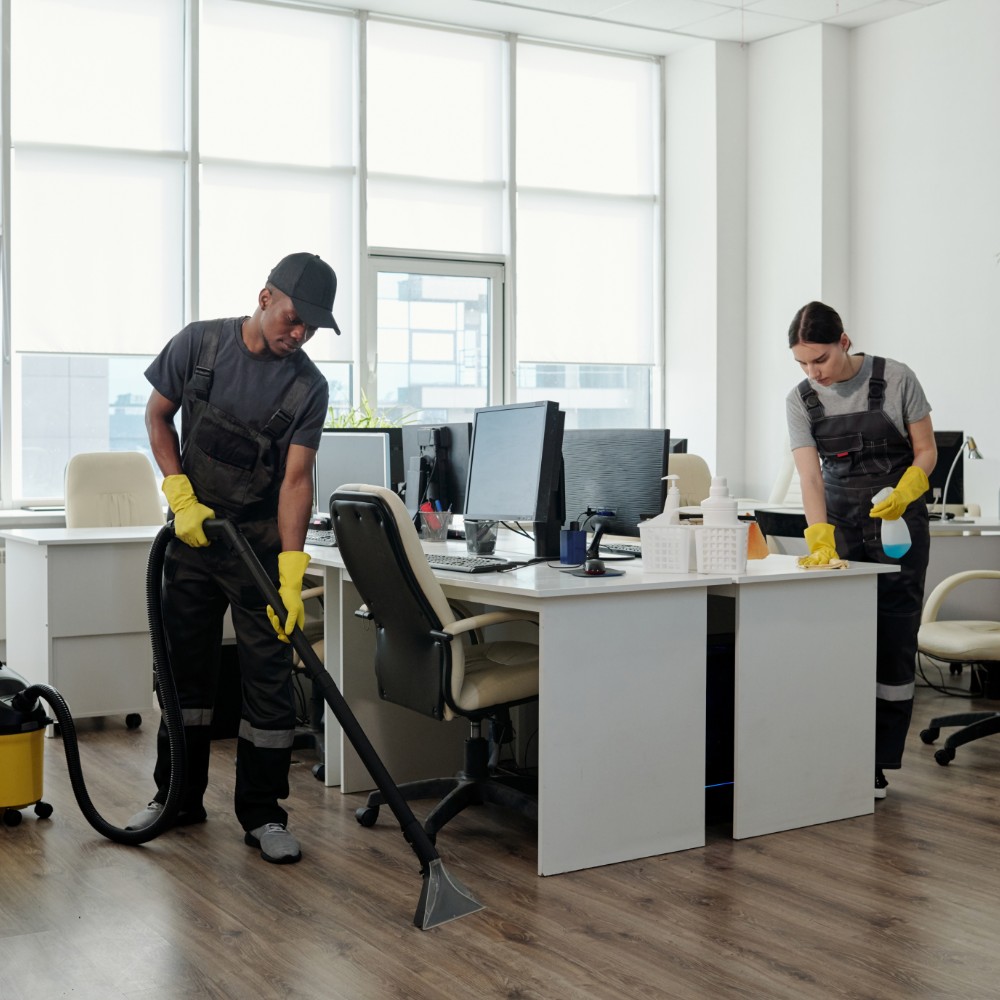
Comprehensive daily and scheduled sanitization services for office common areas including break rooms, kitchens, lobbies, conference rooms, and shared spaces throughout Dallas-Fort Worth. Our trained teams ensure shared spaces remain clean, healthy, and welcoming for employees and visitors while reducing germ transmission.
Service Features
Break Room & Kitchen Cleaning
Thorough cleaning and disinfection of employee break areas including countertops, tables, chairs, appliances, sinks, and cabinet fronts. We remove food debris, sanitize food contact surfaces, and ensure refrigerators, microwaves, and coffee stations are clean and ready for employee use each day.
Lobby & Reception Sanitization
Daily attention to high-visibility reception areas including seating, magazines, counters, and entry doors. We create positive first impressions for visitors while disinfecting high-touch surfaces that harbor germs. This service maintains the professional appearance that reflects your company image.
Conference Room Disinfection
Meeting spaces receive cleaning between uses and thorough sanitization including tables, chairs, presentation equipment, whiteboards, and conference phones. With multiple groups using these spaces throughout the day, regular disinfection prevents cross-contamination and maintains professional appearance.
Elevator & Stairwell Maintenance
High-traffic vertical circulation areas require frequent attention. We clean and disinfect elevator cabs, buttons, handrails, and track systems. Stairwells receive regular cleaning of treads, handrails, and landings. These areas impact daily employee experience and safety.
High-Touch Surface Treatment
Systematic disinfection of frequently touched surfaces including door handles, light switches, handrails, printer areas, and shared equipment. These contact points are primary transmission pathways for germs in office environments and require consistent attention throughout each day.
Appliance Exterior Cleaning
Shared appliances including water coolers, vending machines, copiers, and printers receive regular cleaning and disinfection of touch surfaces. This prevents the buildup of fingerprints, dust, and germs while keeping equipment looking professional and functioning properly.
Benefits of Common Area Cleaning
Promotes Employee Health
Office common areas harbor significant bacterial loads due to shared use. Break room sinks, refrigerator handles, and microwave buttons are among the most contaminated surfaces in offices. Regular professional sanitization reduces pathogen presence that causes colds, flu, and gastrointestinal illness, supporting healthier employees and fewer sick days.
Reduces Germ Transmission
Shared spaces facilitate germ transmission between employees who may not otherwise interact. Disinfection of common touchpoints interrupts these transmission pathways. Research shows that enhanced environmental cleaning in office settings reduces illness-related absenteeism by 30% or more, delivering significant productivity benefits.
Creates Welcoming Environment
Clean, fresh-smelling common areas contribute to employee satisfaction and morale. Employees spend break time and informal meetings in these spaces, and their condition significantly impacts workplace experience. Professional cleaning ensures these areas remain pleasant and inviting places for relaxation and collaboration.
Positive Visitor Impressions
Lobbies, reception areas, and conference rooms create first impressions for clients, job candidates, and business partners. Their cleanliness signals organizational competence and attention to detail. Well-maintained common areas support your professional image and can influence business outcomes and talent attraction.
Improved Employee Morale
Providing clean, well-maintained common areas demonstrates employer care for employee wellbeing. This tangible investment in workplace quality contributes to job satisfaction, engagement, and retention. Employees who feel valued through their work environment are more productive and loyal.
Consistent Professional Standards
Professional cleaning services deliver consistent results that maintain standards even when internal staff are busy with other priorities. Scheduled service ensures common areas never fall below acceptable appearance levels. This reliability supports your facility's ongoing professional image.
Our Common Area Cleaning Process
Service Planning & Scheduling
We develop a customized service schedule based on your office hours, employee patterns, and area usage. Common areas may need multiple daily services, after-hours deep cleaning, or weekend attention depending on your specific needs. We coordinate timing to minimize disruption to employee activities.
Supply & Equipment Setup
Our team arrives with appropriate cleaning supplies, disinfectants, and equipment for the scheduled services. Color-coded microfiber cloths prevent cross-contamination between areas. EPA-registered disinfectants appropriate for office environments are selected for effectiveness and safety.
Trash Removal & Surface Clearing
Waste receptacles are emptied and relined. Surfaces are cleared of debris, food items, and clutter that would interfere with cleaning. This preparation ensures disinfectants can contact all intended surfaces for effective germ elimination.
Cleaning & Disinfection
Surfaces are cleaned to remove visible soil, then disinfected with appropriate dwell time for pathogen elimination. High-touch surfaces receive particular attention. Different areas receive appropriate treatment - food service areas get food-safe sanitizers, general areas receive broad-spectrum disinfectants.
Detail Work & Restocking
Specific attention to fixtures, dispensers, and equipment ensures complete cleanliness. Paper products, soap, and hand sanitizer are restocked as needed. Coffee stations and break areas are arranged neatly for employee convenience.
Quality Check & Documentation
Completed work is inspected to ensure standards are met. Any issues or supply needs are noted for follow-up. Service documentation records work performed for your facilities management. We communicate any concerns that need your attention.
The Microbiology of Office Common Areas
Best Practices for Office Common Area Hygiene
Seasonal Considerations for Office Common Area Cleaning
Measuring Common Area Cleaning Effectiveness
Frequently Asked Questions
How often should office common areas be professionally cleaned?
Frequency depends on facility size, occupancy, and area usage. High-traffic common areas like break rooms and lobbies typically need daily service, sometimes multiple times per day in large facilities. Conference rooms may need cleaning between meetings and thorough daily service. We assess your specific employee counts, usage patterns, and appearance standards to recommend an appropriate service schedule that maintains clean, healthy common areas cost-effectively.
What time of day do you provide common area cleaning?
We offer flexible scheduling to match your operational needs. Options include early morning service before employees arrive, midday service during lunch when break rooms are available, evening service after business hours, or a combination approach. Many facilities benefit from daily midday break room attention combined with after-hours thorough cleaning. We work with your schedule preferences and operational requirements to provide effective service with minimal disruption.
Do you provide supplies like paper towels and soap?
Our service includes checking and restocking supplies you provide, ensuring dispensers never run empty during business hours. If you prefer, we can also manage supply procurement as an additional service, handling inventory, ordering, and delivery of paper products, hand soap, trash liners, and other consumables. This comprehensive approach eliminates the administrative burden of supply management.
Are your cleaning products safe for use around food in break rooms?
Yes, we use appropriate products for each area type. In kitchen and break room areas, we select food-contact-surface-safe sanitizers that meet EPA requirements for use around food preparation areas. These products effectively disinfect while being safe for surfaces that may contact food. We follow label directions for proper use and rinse requirements where applicable.
How do you prevent cross-contamination between different areas?
Cross-contamination prevention is fundamental to our protocols. We use color-coded microfiber cloths and mop pads designated for specific areas - restrooms never share tools with break rooms or general areas. Cleaning progresses from cleanest to dirtiest areas within spaces. Cleaning solutions are properly diluted and changed regularly. High-touch surfaces receive dedicated attention with appropriate tools. These practices effectively prevent spread of germs between different common areas.
Can you accommodate special events or increased service needs?
Absolutely. We understand that office needs vary with events, seasons, and circumstances. We can provide enhanced service for important meetings, client visits, holiday preparations, or after events. During cold and flu season, increased disinfection frequency may be beneficial. We maintain flexibility to adjust service levels as your needs change, with advance communication ensuring appropriate staffing and scheduling.
Related Services
Carpet Cleaning
Deep carpet cleaning for offices and commercial spaces using hot water extraction methods.
Furniture Disinfection
Hospital-grade disinfection for desks, chairs, and office furniture to eliminate germs.
Restroom Sanitation
Deep cleaning and disinfection services for commercial restrooms and washrooms.
Medical Cleaning
Specialized deep cleaning for medical offices, clinics, and healthcare facilities.
Ready to Experience the Difference?
Contact us today for a free consultation and customized quote for common area cleaning.
services planning guide
How to plan office common area sanitization for a commercial facility in Dallas
Commercial Cleaning Services of Dallas uses the following planning framework to help property managers and business owners turn a request for commercial cleaning and janitorial service into a scope that can be walked, priced, scheduled, and checked. It is designed for practical comparison and does not replace site-specific safety, material, vendor, or regulatory requirements.
Define the Work Before Pricing It
Before pricing office common area sanitization, document exclusions as carefully as inclusions. Exterior work, high access, consumable supplies, waste handling, specialty floor restoration, equipment interiors, and event cleanup can be scheduled correctly only when responsibility is explicit. Change orders are easier to avoid when the initial office common area sanitization proposal records current conditions. Photographs, floor-type notes, access limitations, and known buildup give both sides a shared baseline for deciding what belongs in startup work and what belongs in recurring maintenance. Office Common Area Sanitization should begin with a written definition of the rooms, surfaces, fixtures, equipment boundaries, and access conditions included in the work. A useful scope separates routine tasks from periodic restoration so the facility manager can see what happens on every visit and what occurs only on a planned cycle. Square footage alone does not define the effort required for office common area sanitization. Occupancy, floor materials, restroom count, food or production activity, security procedures, furniture density, and the time available between closing and reopening all affect labor and equipment planning.
Build the Schedule Around Operations
Scheduling should be built around operating hours and risk, not around the cleaning company’s convenience. Some commercial facility environments need a complete after-hours reset, while others benefit from daytime attention to entrances, restrooms, spills, or high-traffic common areas. A dependable plan includes a method for reporting schedule changes. The facility contact should know whom to notify, how much lead time is needed, and how missed or added visits affect the monthly program before an urgent request arises. Facilities with irregular occupancy should use a flexible service calendar. Seasonal traffic, events, construction phases, tenant move-ins, inventory cycles, and weather can all create temporary cleaning demand that a rigid schedule will miss. A nightly, daily, weekly, or project schedule changes more than visit frequency. It changes how much soil accumulates between visits, which tools are appropriate, how long each visit takes, and whether periodic deep work must be layered into the agreement.
Make Quality Control Observable
Quality control works best when it is tied to the site-specific scope. A supervisor can inspect completion against named rooms and outcomes, record exceptions, assign corrections, and identify patterns that require a change in staffing, tools, or frequency. Useful performance conversations separate an isolated miss from a recurring process failure. One unemptied bin requires correction; repeated misses in the same wing may indicate unclear zoning, inadequate time, or a checklist that does not match the building. A single complaint channel prevents service issues from disappearing between building occupants, property management, and the cleaning crew. Requests should be logged with the location, task, urgency, and desired completion time so the response can be verified. Before-and-after documentation is especially valuable for one-time or restorative office common area sanitization. It establishes the starting condition, records the completed result, and helps the facility manager decide whether a recurring maintenance cycle would prevent the same buildup.
Match Methods to Materials and Risk
For sensitive or newly installed materials, a small test area can prevent expensive mistakes. The service plan should identify who approves the test result before broader cleaning or restoration proceeds. Color-coded cloths, pads, and tools can reduce cross-use between restrooms, food areas, workspaces, and public surfaces. The exact system matters less than having a documented method the crew can follow consistently. Consumable supplies deserve their own responsibility list. Soap, paper products, liners, dispensers, batteries, air fresheners, and specialty items may be client supplied, contractor supplied, or billed separately, but the agreement should not leave that question open. Surface identification matters because a process that works on one material can damage another. Before office common area sanitization, confirm flooring, stone, coated metal, glass treatments, upholstery, painted surfaces, and manufacturer restrictions that affect chemistry or agitation.
Use the Walkthrough to Build the Scope
Access and safety constraints should be demonstrated, not merely mentioned. Alarm panels, loading doors, restricted areas, waste points, water access, electrical access, and equipment storage can change the labor plan materially. Bring a current floor plan, operating schedule, and list of known problem areas to the walkthrough. These details help Commercial Cleaning Services of Dallas organize office common area sanitization around actual conditions instead of estimating from square footage and a short phone description. If the requested office common area sanitization includes restorative work, identify the difference between a first-service reset and ongoing maintenance. Startup work may require additional labor that should not be hidden inside the recurring visit price. Ask department leads or regular occupants where cleaning failures are most visible. Facility managers often know the formal complaints, while daily users can identify recurring issues such as neglected corners, supply shortages, or timing conflicts.
Put the Service Agreement in Writing
A structured startup period gives both sides a chance to refine the scope. Early inspections and a scheduled review after the first few visits can resolve workload assumptions before they become embedded in a long-term program. A commercial cleaning agreement should attach or reproduce the approved scope, frequency, service window, periodic task calendar, supply responsibilities, access rules, and communication contacts. The written detail protects both the property and the service team. Cancellation, renewal, and notice terms deserve the same attention as the cleaning checklist. A facility manager comparing proposals should understand the initial term, renewal method, price-review process, and the notice required to change or end service. Insurance and vendor-document requirements should be confirmed during proposal review rather than after award. If the property requires a certificate, additional insured wording, vendor portal registration, or special access documentation, those steps can affect the startup date.
Plan for Dallas Facility Conditions
A local service plan should account for the property’s immediate environment. Construction nearby, open parking, landscaping, loading activity, and pedestrian traffic can change how quickly dust and debris return after a visit. Properties across Dallas–Fort Worth vary widely in access, occupancy, and operating schedule. A downtown office, suburban medical suite, industrial building, retail center, and hospitality property should not receive the same labor plan simply because their square footage is similar. Commercial properties in the region frequently combine offices, warehouses, showrooms, food service, or public-facing areas under one address. Zoning the scope by use keeps the cleaning method appropriate for each part of the building. Dallas facilities contend with long cooling seasons, tracked-in dust, pollen, severe-weather debris, and rapid development activity. Those conditions can influence entry cleaning, high dusting, floor care, glass maintenance, and the timing of periodic deep work.
Compare Providers on More Than Price
Review the proposal for vague language. Terms such as “as needed,” “regularly,” and “periodically” should be converted into frequencies, triggers, or approval rules before the agreement is signed. The final decision should align service frequency with the facility’s real use. Buying fewer visits than the property needs creates visible decline; buying unnecessary frequency wastes budget that could be directed to periodic or high-priority work. Consider the cost of under-scoping. Persistent complaints, damaged finishes, emergency restoration, staff time spent supervising the vendor, and repeated provider changes can cost more than a properly designed recurring program. When comparing office common area sanitization proposals, normalize the scope before comparing price. A lower monthly number may exclude periodic work, supplies, supervision, floor care, or enough labor to complete the stated checklist.
Start, Measure, and Adjust the Program
Task sequencing affects results. High dusting should precede lower-surface cleaning, dry soil removal should precede wet work, and areas with restricted reopening times should be completed early enough to dry or ventilate. Crew orientation should cover the approved scope, building access, material cautions, waste handling, supply storage, security, and the communication path for exceptions. Written information is more dependable than verbal instructions passed between shifts. After the first service cycle, compare actual labor and facility condition with the proposal assumptions. If the original scope was inaccurate, adjust it openly rather than expecting quality to survive an unrealistic workload. The crew should record conditions outside the approved scope rather than quietly ignoring them or performing unapproved work. Photos and concise notes allow the facility manager to decide whether a separate service is warranted.
Bring to the walkthrough
- Approximate square footage, floor plan, and operating hours
- Current frequency, known complaints, and priority areas
- Flooring and surface notes, restricted rooms, and access rules
- Desired start date, budget constraints, and approval contacts
Expect in a written proposal
- Task scope by zone and visit frequency
- Service windows, periodic work, and supply responsibility
- Quality checks, communication, and correction procedures
- Pricing assumptions, exclusions, and change-order rules