Hospital-Grade Disinfection for Office Furniture & Workstations
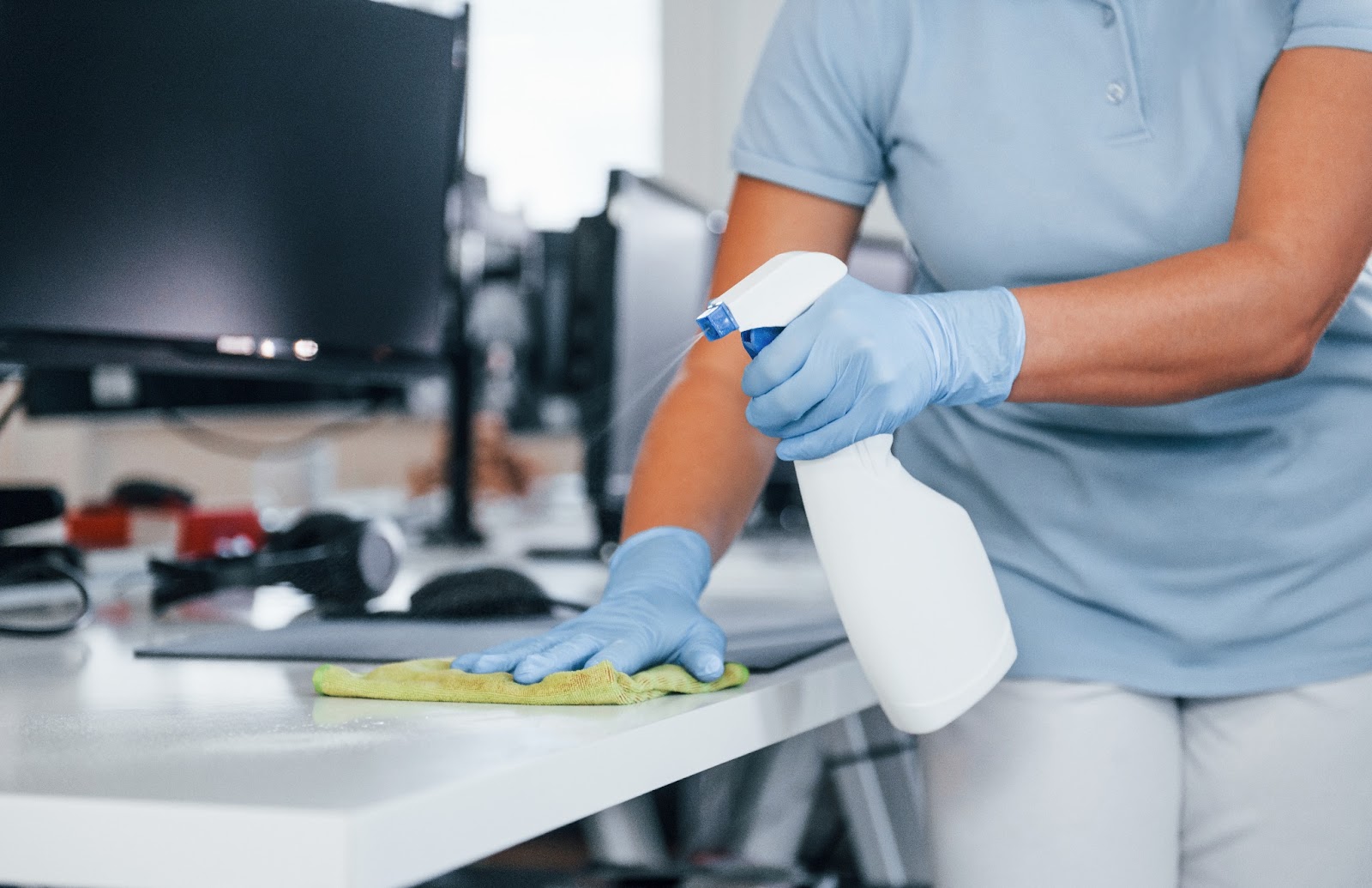
Comprehensive disinfection services for office furniture, workstations, and high-touch surfaces throughout Dallas commercial facilities. Our trained technicians use EPA-registered hospital-grade disinfectants and electrostatic application technology to eliminate viruses, bacteria, and pathogens from desks, chairs, cubicles, and shared work areas, creating a healthier workplace environment.
Service Features
High-Touch Surface Disinfection
We systematically disinfect all high-touch surfaces including desk surfaces, drawer pulls, armrests, chair backs, keyboard trays, monitor stands, and shared equipment. Studies show office workers touch their face 16 times per hour, making surface disinfection critical for preventing illness transmission in workplace environments.
Workstation Deep Sanitization
Each individual workstation receives thorough attention including desk tops, edges, partition walls, phone handsets, and personal workspace items. Our team works methodically through open office layouts, private offices, and cubicle farms to ensure complete coverage of all work surfaces.
Conference Room Treatment
Meeting spaces receive special attention due to high turnover and shared use. We disinfect conference tables, chairs, presentation equipment, whiteboard trays, and video conferencing systems. This protects against cross-contamination between different groups using the same space throughout the day.
Electrostatic Spray Application
Our advanced electrostatic sprayers apply disinfectant with a positive electrical charge that causes droplets to wrap around and adhere to all surfaces, including undersides and backs of furniture. This technology achieves 360-degree coverage and uses 65% less chemical while delivering superior results compared to traditional spray-and-wipe methods.
Fabric & Upholstery Sanitization
Office chairs, lobby seating, and fabric panels receive specialized treatment using disinfectants safe for upholstery materials. We address the porous surfaces where pathogens can harbor, eliminating bacteria and viruses from fabric surfaces without causing damage or discoloration to materials.
Documentation & Certification
We provide detailed service documentation including date, time, areas treated, products used, and technician certification. This documentation supports your health and safety compliance efforts, provides evidence for insurance or regulatory requirements, and demonstrates your commitment to employee wellbeing.
Benefits of Furniture Disinfection
Reduced Workplace Illness Transmission
Office surfaces harbor significant microbial contamination. Research indicates office desks contain 400 times more bacteria than toilet seats. Regular professional disinfection of furniture and surfaces significantly reduces the presence of pathogens that cause colds, flu, and other illnesses, leading to fewer sick days and healthier employees.
Protection Against Viral Outbreaks
Viruses including influenza, norovirus, and coronaviruses can survive on hard surfaces for hours to days. Professional disinfection with EPA-registered virucidal products eliminates these threats. During cold and flu season or illness outbreaks, increased disinfection frequency helps prevent rapid spread through your workforce.
Enhanced Employee Confidence
Visible commitment to workplace hygiene demonstrates that you value employee health and safety. This builds trust, reduces anxiety about workplace illness, and contributes to higher morale and productivity. Employees who feel their employer cares about their wellbeing are more engaged and loyal.
Health Compliance & Risk Management
While OSHA does not mandate specific disinfection protocols, employers have a general duty to provide a workplace free from recognized hazards. Professional disinfection services help meet this obligation, demonstrate due diligence, and provide documentation that supports your health and safety program in case of liability concerns.
Extended Furniture Lifespan
Regular cleaning and disinfection removes body oils, sweat, food particles, and organic matter that degrade upholstery and surface finishes over time. This maintenance extends the functional life and appearance of your office furniture investment while keeping it hygienic for users.
Improved Indoor Environmental Quality
Organic matter accumulation on furniture supports bacterial growth that can contribute to unpleasant odors and poor air quality. Professional disinfection eliminates these sources of contamination, creating a fresher, more pleasant workplace environment that employees and visitors appreciate.
Our Furniture Disinfection Process
Site Assessment & Protocol Development
We evaluate your office layout, furniture types, occupancy patterns, and specific concerns to develop a customized disinfection protocol. This includes identifying high-priority areas, determining appropriate service frequency, and selecting EPA-registered disinfectants effective against your target pathogens.
Pre-Cleaning Preparation
Our technicians remove visible debris, clutter, and loose items from surfaces before disinfection. This preparation ensures disinfectant contacts all intended surfaces rather than being blocked by papers, objects, or soil that would prevent proper sanitization.
Pre-Cleaning of Surfaces
Surfaces are pre-cleaned with detergent solutions to remove visible soil, dust, and organic matter. Disinfectants work most effectively on clean surfaces; soil and debris can inactivate disinfectant active ingredients and prevent proper contact with pathogens.
Disinfectant Application
We apply hospital-grade disinfectant using electrostatic sprayers, microfiber cloths, or trigger sprayers depending on surface type and situation. Products remain on surfaces for the required dwell time (typically 5-10 minutes) to ensure complete pathogen elimination as specified by EPA registration.
High-Touch Detail Work
Door handles, light switches, elevator buttons, shared equipment, and other frequently touched surfaces receive additional attention with microfiber cloths saturated with disinfectant. These critical contact points receive thorough wiping to ensure complete coverage.
Quality Check & Documentation
A supervisor inspects treated areas to verify complete coverage and proper dwell times. We document all services performed, products used, areas treated, and technician information. This documentation is provided for your records and compliance needs.
Understanding Pathogens in Office Environments
EPA-Registered Disinfectants and Their Applications
Best Practices for Office Furniture Disinfection
Integrating Disinfection into Your Workplace Wellness Program
Frequently Asked Questions
How is disinfection different from regular cleaning?
Cleaning removes visible dirt, debris, and some germs from surfaces using soap or detergent and water. Disinfection uses EPA-registered chemical products specifically designed to kill pathogens on surfaces. While cleaning is important and should occur first, only disinfection achieves the microbial kill necessary to prevent disease transmission. Our service includes both cleaning and disinfection steps for comprehensive surface treatment.
How often should office furniture be disinfected?
Frequency depends on facility type, occupancy density, and current health concerns. Standard offices benefit from weekly or bi-weekly disinfection. High-traffic areas, shared workstations, and facilities with frequent visitor contact may need daily treatment. During cold and flu season or illness outbreaks, increased frequency is recommended. We assess your specific situation and recommend an appropriate schedule based on risk factors and budget considerations.
Are the disinfectants you use safe for office environments?
Yes, we use EPA-registered disinfectants that are effective against pathogens while being safe for use in occupied spaces when applied according to label directions. These products are designed for commercial and healthcare settings. We follow all safety protocols including proper dilution, dwell times, and ventilation. After the required dwell time and any necessary wiping, treated surfaces are safe for normal contact. We can discuss specific product information and safety data sheets upon request.
Can disinfection damage office furniture or electronics?
When performed by trained professionals using appropriate products and methods, disinfection will not damage office furniture or electronics. We select disinfectants compatible with various surface materials including wood, laminate, fabric, metal, and plastic. For electronics, we use specially formulated products that sanitize without harming sensitive components. We never over-saturate surfaces and use application methods appropriate to the item being treated.
What is electrostatic spraying and why is it better?
Electrostatic sprayers apply disinfectant with a positive electrical charge that causes droplets to attract and wrap around surfaces. This creates 360-degree coverage, reaching backsides and undersides of furniture that traditional wiping misses. The charged droplets also coat surfaces more evenly and use less chemical product. This technology is particularly effective for complex office furniture with multiple surfaces, edges, and hard-to-reach areas that would be time-consuming to treat manually.
Do you provide service outside regular business hours?
Yes, we understand that office disinfection is best performed when employees are not present. We offer flexible scheduling including early morning, evening, overnight, and weekend service to minimize disruption to your operations. Our technicians can work independently with building access or coordinate with your facilities team. We accommodate your preferred timing to ensure thorough service without interfering with business activities.
Related Services
Upholstery Cleaning
Deep cleaning for office chairs, sofas, and commercial fabric furniture.
Restroom Sanitation
Deep cleaning and disinfection services for commercial restrooms and washrooms.
Medical Cleaning
Specialized deep cleaning for medical offices, clinics, and healthcare facilities.
Common Area Cleaning
Regular sanitization for break rooms, lobbies, and shared office spaces.
Ready to Experience the Difference?
Contact us today for a free consultation and customized quote for furniture disinfection.
services planning guide
How to plan office furniture disinfection for a commercial facility in Dallas
Commercial Cleaning Services of Dallas uses the following planning framework to help property managers and business owners turn a request for commercial cleaning and janitorial service into a scope that can be walked, priced, scheduled, and checked. It is designed for practical comparison and does not replace site-specific safety, material, vendor, or regulatory requirements.
Define the Work Before Pricing It
Before pricing office furniture disinfection, document exclusions as carefully as inclusions. Exterior work, high access, consumable supplies, waste handling, specialty floor restoration, equipment interiors, and event cleanup can be scheduled correctly only when responsibility is explicit. The strongest office furniture disinfection plan names measurable outcomes rather than relying on broad phrases such as “keep it clean.” Examples include streak-free entry glass, stocked and odor-controlled restrooms, debris-free floor edges, sanitized touchpoints, and completion before a stated opening time. Change orders are easier to avoid when the initial office furniture disinfection proposal records current conditions. Photographs, floor-type notes, access limitations, and known buildup give both sides a shared baseline for deciding what belongs in startup work and what belongs in recurring maintenance. For multi-tenant or mixed-use properties, office furniture disinfection should be divided by responsibility zone. Common areas, tenant suites, back-of-house spaces, loading areas, public restrooms, and restricted rooms can then receive schedules and approval rules that match their actual use.
Build the Schedule Around Operations
Scheduling should be built around operating hours and risk, not around the cleaning company’s convenience. Some commercial facility environments need a complete after-hours reset, while others benefit from daytime attention to entrances, restrooms, spills, or high-traffic common areas. Recurring office furniture disinfection should include planned periodic work instead of waiting for visible deterioration. Rotating detail tasks through monthly or quarterly cycles protects floors, fixtures, glass, vents, edges, and other zones that routine visits cannot address completely. Facilities with irregular occupancy should use a flexible service calendar. Seasonal traffic, events, construction phases, tenant move-ins, inventory cycles, and weather can all create temporary cleaning demand that a rigid schedule will miss. Daytime and after-hours service solve different operational problems. Day porter coverage manages visible conditions while people are present; after-hours crews complete disruptive or time-intensive tasks when work areas can be accessed safely and thoroughly.
Make Quality Control Observable
Quality control works best when it is tied to the site-specific scope. A supervisor can inspect completion against named rooms and outcomes, record exceptions, assign corrections, and identify patterns that require a change in staffing, tools, or frequency. A quality program should explain how corrections are handled. The facility contact needs a clear response path, a reasonable correction window, and confirmation when the issue is closed rather than a vague assurance that someone will look into it. The account review should examine service requests, inspection findings, occupancy changes, supply use, and upcoming facility events. That review keeps the program aligned with the property instead of allowing an old scope to continue after the building changes. A single complaint channel prevents service issues from disappearing between building occupants, property management, and the cleaning crew. Requests should be logged with the location, task, urgency, and desired completion time so the response can be verified.
Match Methods to Materials and Risk
For sensitive or newly installed materials, a small test area can prevent expensive mistakes. The service plan should identify who approves the test result before broader cleaning or restoration proceeds. Surface identification matters because a process that works on one material can damage another. Before office furniture disinfection, confirm flooring, stone, coated metal, glass treatments, upholstery, painted surfaces, and manufacturer restrictions that affect chemistry or agitation. Equipment should be selected for the facility rather than for convenience. HEPA filtration, low-moisture extraction, auto-scrubbing, water-fed poles, pressure equipment, or detail tools may be appropriate depending on access, surface, soil, and reopening time. A material-safety discussion should include storage and labeling. Facility contacts should know where products and equipment will be kept, which rooms remain accessible to occupants, and how spills or damaged containers are reported.
Use the Walkthrough to Build the Scope
Access and safety constraints should be demonstrated, not merely mentioned. Alarm panels, loading doors, restricted areas, waste points, water access, electrical access, and equipment storage can change the labor plan materially. Discuss current service honestly during the walkthrough. What works should be preserved, what fails should be corrected, and any unrealistic expectation should be resolved before it becomes a recurring dispute after startup. Bring a current floor plan, operating schedule, and list of known problem areas to the walkthrough. These details help Commercial Cleaning Services of Dallas organize office furniture disinfection around actual conditions instead of estimating from square footage and a short phone description. The walkthrough should follow the facility’s traffic pattern from entrances through work areas, restrooms, support rooms, and exits. This reveals where soil enters, where it concentrates, and which tasks must be completed in a particular order.
Put the Service Agreement in Writing
A structured startup period gives both sides a chance to refine the scope. Early inspections and a scheduled review after the first few visits can resolve workload assumptions before they become embedded in a long-term program. Cancellation, renewal, and notice terms deserve the same attention as the cleaning checklist. A facility manager comparing proposals should understand the initial term, renewal method, price-review process, and the notice required to change or end service. Insurance and vendor-document requirements should be confirmed during proposal review rather than after award. If the property requires a certificate, additional insured wording, vendor portal registration, or special access documentation, those steps can affect the startup date. A commercial cleaning agreement should attach or reproduce the approved scope, frequency, service window, periodic task calendar, supply responsibilities, access rules, and communication contacts. The written detail protects both the property and the service team.
Plan for Dallas Facility Conditions
A local service plan should account for the property’s immediate environment. Construction nearby, open parking, landscaping, loading activity, and pedestrian traffic can change how quickly dust and debris return after a visit. Fast regional growth creates frequent move-ins, renovations, tenant turnovers, and occupancy changes. The cleaning scope should be reviewed when a property changes use instead of assuming the previous tenant’s schedule remains appropriate. Properties across Dallas–Fort Worth vary widely in access, occupancy, and operating schedule. A downtown office, suburban medical suite, industrial building, retail center, and hospitality property should not receive the same labor plan simply because their square footage is similar. Storm seasons can create short-notice needs around entrances, exterior glass, tracked moisture, construction material, and debris. A recurring account should know how to request work outside the normal scope and whether priority response is available.
Compare Providers on More Than Price
Review the proposal for vague language. Terms such as “as needed,” “regularly,” and “periodically” should be converted into frequencies, triggers, or approval rules before the agreement is signed. Evaluate communication alongside cleaning technique. A facility manager needs timely updates, a named account contact, documented service requests, and a reliable process for resolving issues without repeatedly explaining the account. References are most useful when the compared account resembles the property in size, use, and schedule. A successful small office account does not by itself demonstrate the systems needed for a large, high-traffic, or specialized facility. Ask each provider to explain staffing assumptions, visit length, supervision, equipment, and the process for covering absences. The answer reveals whether the proposal is an operating plan or simply a price attached to a task list.
Start, Measure, and Adjust the Program
Task sequencing affects results. High dusting should precede lower-surface cleaning, dry soil removal should precede wet work, and areas with restricted reopening times should be completed early enough to dry or ventilate. The first visit should not be treated as an ordinary maintenance visit when buildup already exists. Startup cleaning establishes a maintainable baseline and gives the crew a realistic view of the time required for future service. Crew orientation should cover the approved scope, building access, material cautions, waste handling, supply storage, security, and the communication path for exceptions. Written information is more dependable than verbal instructions passed between shifts. After the first service cycle, compare actual labor and facility condition with the proposal assumptions. If the original scope was inaccurate, adjust it openly rather than expecting quality to survive an unrealistic workload.
Bring to the walkthrough
- Approximate square footage, floor plan, and operating hours
- Current frequency, known complaints, and priority areas
- Flooring and surface notes, restricted rooms, and access rules
- Desired start date, budget constraints, and approval contacts
Expect in a written proposal
- Task scope by zone and visit frequency
- Service windows, periodic work, and supply responsibility
- Quality checks, communication, and correction procedures
- Pricing assumptions, exclusions, and change-order rules