
Thorough Restroom Cleaning & Sanitation for Commercial Facilities
Comprehensive restroom cleaning and deep sanitation services for office buildings, retail stores, restaurants, and public facilities throughout Dallas-Fort Worth. Our trained technicians follow detailed protocols to ensure your restrooms meet the highest hygiene standards, eliminating bacteria, viruses, and odors while creating a pleasant experience for employees and visitors.
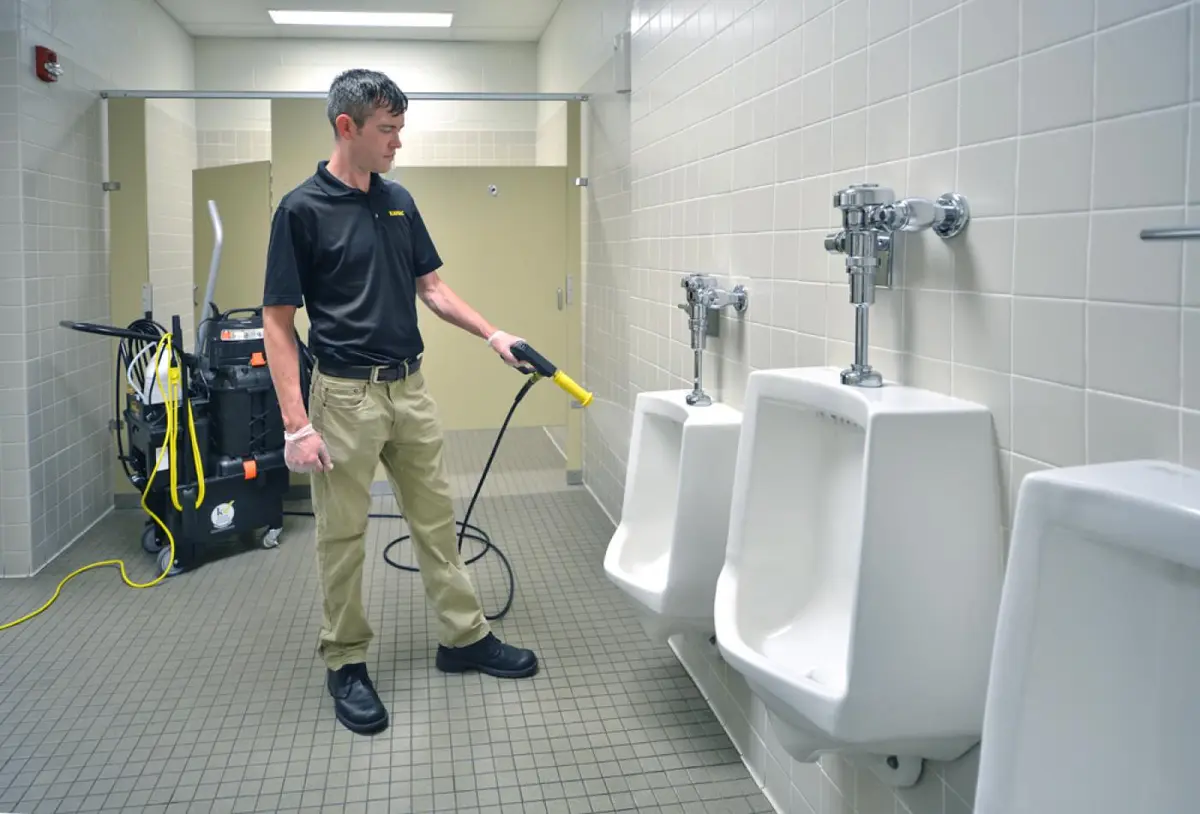
Service Features
Complete Fixture Disinfection
All restroom fixtures including toilets, urinals, sinks, and faucets receive thorough disinfection using EPA-registered hospital-grade products. We pay special attention to high-touch surfaces like flush handles, faucet controls, and door handles where pathogens commonly transfer between users, ensuring complete elimination of bacteria and viruses.
Tile & Grout Deep Cleaning
Floor and wall tile, along with grout lines, are deep cleaned using professional-grade equipment and cleaning solutions that remove embedded bacteria, mold, mildew, and stains. Grout sealing is available to prevent future staining and make ongoing maintenance easier while maintaining a fresh, clean appearance.
Mirror & Surface Polishing
Mirrors, countertops, partitions, and all hard surfaces are cleaned and polished to streak-free perfection. We remove water spots, soap residue, and fingerprints while disinfecting surfaces. Stainless steel fixtures receive specialized treatment to remove water stains and restore their original luster.
Odor Elimination Treatment
Rather than masking odors with fragrances, we address the source of restroom odors through thorough cleaning of urinals, drains, and other bacteria-harboring areas. Enzyme treatments break down organic matter causing odors, while proper ventilation assessment helps identify and resolve persistent odor issues.
Supply Restocking Service
Our service includes checking and restocking essential supplies including toilet paper, paper towels, hand soap, and seat covers. We ensure adequate inventory levels so your restrooms never run out of necessities, maintaining user satisfaction and hygiene compliance between scheduled service visits.
Floor Drain & Trap Maintenance
Floor drains and plumbing traps are common sources of odors and bacteria. We clean and treat these areas to eliminate buildup and prevent sewer gas escape. Regular maintenance prevents clogs, eliminates breeding grounds for drain flies, and maintains proper drainage function.
Benefits of Restroom Sanitation
Health Code Compliance Assurance
Proper restroom sanitation is essential for meeting health department regulations in food service, healthcare, and public facilities. Our thorough cleaning protocols help ensure compliance with local health codes, reducing the risk of violations, fines, or business closure during inspections.
Elimination of Harmful Pathogens
Restrooms harbor significant bacterial loads including E. coli, salmonella, streptococcus, and other pathogens that can cause illness. Professional-grade disinfectants and thorough cleaning protocols eliminate 99.9% of these harmful microorganisms, protecting the health of employees, customers, and visitors.
Enhanced Employee Satisfaction
Clean, well-maintained restrooms significantly impact employee morale and job satisfaction. Studies show that restroom cleanliness ranks among the top factors in workplace satisfaction. Providing hygienic facilities demonstrates employer care for employee wellbeing and contributes to a positive work environment.
Positive Customer Impressions
For retail stores, restaurants, and customer-facing businesses, restroom cleanliness directly impacts customer perception and likelihood of return visits. Research indicates that 86% of customers equate restroom cleanliness with overall business quality. Professional sanitation protects your reputation and customer relationships.
Reduced Plumbing Issues
Regular professional cleaning prevents buildup of scale, soap scum, and organic matter that can cause slow drains, clogs, and plumbing emergencies. Proactive maintenance of fixtures and drains extends plumbing system life and reduces costly emergency service calls.
Odor Control & Fresh Environment
Persistent restroom odors create negative impressions and suggest poor hygiene regardless of actual cleanliness. Our comprehensive approach eliminates odor sources rather than masking them, creating consistently fresh-smelling facilities that users appreciate and associate with quality.
Our Restroom Sanitation Process
Pre-Service Inspection
Our technician assesses the restroom condition, identifies problem areas requiring special attention, checks supply levels, and notes any maintenance issues like leaking fixtures or damaged items. This evaluation ensures comprehensive service and provides you with feedback on facility condition.
Ventilation & Safety Setup
We ensure proper ventilation is operating and post wet floor signs to prevent slips. The restroom is cleared of users, and we prepare our equipment and cleaning solutions. Personal protective equipment is donned to protect our technicians during the cleaning process.
Dusting & Debris Removal
All surfaces are dusted from top to bottom, including vents, light fixtures, partitions, and ledges. Trash receptacles are emptied and relined. This preparation removes loose debris before wet cleaning begins and ensures disinfectants contact surfaces directly.
Fixture Cleaning & Disinfection
Toilets and urinals are thoroughly cleaned inside and out with acid-based bowl cleaners to remove scale and stains, then disinfected. Sinks, faucets, and counters are scrubbed and disinfected. All high-touch surfaces receive hospital-grade disinfectant with proper dwell time for pathogen elimination.
Surface & Floor Cleaning
Walls, partitions, doors, and hardware are washed and disinfected. Mirrors and brightwork are polished to streak-free shine. Floors are thoroughly mopped with appropriate cleaners and disinfectants, with special attention to corners, baseboards, and areas around fixtures.
Final Inspection & Restocking
The technician performs a quality check of all cleaned areas, ensuring nothing was missed. Supplies are restocked to appropriate levels. Paper products are properly arranged, soap dispensers filled, and any maintenance issues documented for facility management attention.
The Science of Restroom Hygiene and Pathogen Control
Understanding Restroom Odor Sources and Solutions
Restroom Maintenance for Different Commercial Environments
Green Cleaning Options for Environmentally Conscious Facilities
Frequently Asked Questions
How often should commercial restrooms be professionally cleaned?
Frequency depends on facility type, occupancy, and usage patterns. High-traffic restrooms in retail stores, restaurants, and office buildings typically need daily cleaning with periodic deep sanitization services. Medium-traffic facilities may require service 3-5 times per week. We assess your specific situation including number of users, business hours, and appearance standards to recommend an appropriate service schedule.
What disinfectants do you use in restrooms?
We use EPA-registered hospital-grade disinfectants effective against a broad spectrum of bacteria and viruses commonly found in restrooms. These products meet OSHA bloodborne pathogen standards and are appropriate for healthcare, food service, and general commercial use. We select products based on your facility type and specific requirements, with options including environmentally preferred formulations. Safety data sheets are available upon request.
Can you clean restrooms during business hours?
Yes, though we typically recommend scheduling deep cleaning during off-hours to minimize disruption and allow proper dwell times for disinfectants. For facilities requiring daytime service, we can clean individual restrooms sequentially while maintaining others available for use. We work with your schedule preferences and operational requirements to provide service at the most convenient times.
Do you provide supplies as part of the service?
Our service includes checking and restocking supplies you provide. If you prefer, we can arrange supply procurement and management as an additional service, ensuring you always have appropriate paper products, soaps, and other necessities without the administrative burden. We work with major supply distributors to provide quality products at competitive prices.
How do you handle persistent restroom odors?
Odor elimination requires addressing the source rather than masking smells with air fresheners. We identify and treat common odor sources including uric acid buildup in urinals, organic matter in drains, bacterial growth in grout, and inadequate ventilation. Enzyme treatments break down odor-causing compounds. For persistent issues, we assess ventilation systems and may recommend plumbing inspection if drain problems are suspected.
Are your restroom cleaning services compliant with health regulations?
Yes, our cleaning protocols meet or exceed health department requirements for commercial restrooms. We follow CDC guidelines for disinfection and use EPA-registered products appropriate for your facility type. Our technicians are trained in proper procedures including dwell times, dilution ratios, and cross-contamination prevention. Documentation of cleaning services can be provided to support health inspection compliance.
Related Services
Furniture Disinfection
Hospital-grade disinfection for desks, chairs, and office furniture to eliminate germs.
Tile & Grout
Deep cleaning and restoration for commercial tile floors, walls, and grout lines.
Mold Remediation
Safe mold and mildew removal and prevention for commercial buildings.
Common Area Cleaning
Regular sanitization for break rooms, lobbies, and shared office spaces.
Ready to Experience the Difference?
Contact us today for a free consultation and customized quote for restroom sanitation.
services planning guide
How to plan commercial restroom sanitation for a commercial facility in Dallas
Commercial Cleaning Services of Dallas uses the following planning framework to help property managers and business owners turn a request for commercial cleaning and janitorial service into a scope that can be walked, priced, scheduled, and checked. It is designed for practical comparison and does not replace site-specific safety, material, vendor, or regulatory requirements.
Define the Work Before Pricing It
For multi-tenant or mixed-use properties, commercial restroom sanitation should be divided by responsibility zone. Common areas, tenant suites, back-of-house spaces, loading areas, public restrooms, and restricted rooms can then receive schedules and approval rules that match their actual use. Commercial Restroom Sanitation should begin with a written definition of the rooms, surfaces, fixtures, equipment boundaries, and access conditions included in the work. A useful scope separates routine tasks from periodic restoration so the facility manager can see what happens on every visit and what occurs only on a planned cycle. A commercial scope should distinguish appearance cleaning from hygiene work and asset maintenance. Dust removal, disinfection, floor finish care, glass restoration, and debris control solve different problems, use different processes, and often belong on different frequencies. Change orders are easier to avoid when the initial commercial restroom sanitation proposal records current conditions. Photographs, floor-type notes, access limitations, and known buildup give both sides a shared baseline for deciding what belongs in startup work and what belongs in recurring maintenance.
Build the Schedule Around Operations
Daytime and after-hours service solve different operational problems. Day porter coverage manages visible conditions while people are present; after-hours crews complete disruptive or time-intensive tasks when work areas can be accessed safely and thoroughly. Facilities with irregular occupancy should use a flexible service calendar. Seasonal traffic, events, construction phases, tenant move-ins, inventory cycles, and weather can all create temporary cleaning demand that a rigid schedule will miss. A nightly, daily, weekly, or project schedule changes more than visit frequency. It changes how much soil accumulates between visits, which tools are appropriate, how long each visit takes, and whether periodic deep work must be layered into the agreement. A dependable plan includes a method for reporting schedule changes. The facility contact should know whom to notify, how much lead time is needed, and how missed or added visits affect the monthly program before an urgent request arises.
Make Quality Control Observable
Before-and-after documentation is especially valuable for one-time or restorative commercial restroom sanitation. It establishes the starting condition, records the completed result, and helps the facility manager decide whether a recurring maintenance cycle would prevent the same buildup. Inspection frequency should reflect the complexity of the account. A small weekly office may need periodic supervisory review, while a high-traffic or regulated environment may require documented checks several times each week. Useful performance conversations separate an isolated miss from a recurring process failure. One unemptied bin requires correction; repeated misses in the same wing may indicate unclear zoning, inadequate time, or a checklist that does not match the building. Consistent crew assignments improve commercial restroom sanitation because the team learns access routines, material sensitivities, recurring problem areas, and the expectations of the facility contact. Coverage plans are still necessary for absences so consistency does not depend on one individual.
Match Methods to Materials and Risk
Color-coded cloths, pads, and tools can reduce cross-use between restrooms, food areas, workspaces, and public surfaces. The exact system matters less than having a documented method the crew can follow consistently. Equipment should be selected for the facility rather than for convenience. HEPA filtration, low-moisture extraction, auto-scrubbing, water-fed poles, pressure equipment, or detail tools may be appropriate depending on access, surface, soil, and reopening time. Dwell time and physical removal are central to effective cleaning. A product cannot perform as intended if it is wiped away immediately, and loosened soil still needs to be removed with clean tools rather than redistributed across the surface. For sensitive or newly installed materials, a small test area can prevent expensive mistakes. The service plan should identify who approves the test result before broader cleaning or restoration proceeds.
Use the Walkthrough to Build the Scope
The walkthrough should follow the facility’s traffic pattern from entrances through work areas, restrooms, support rooms, and exits. This reveals where soil enters, where it concentrates, and which tasks must be completed in a particular order. If the requested commercial restroom sanitation includes restorative work, identify the difference between a first-service reset and ongoing maintenance. Startup work may require additional labor that should not be hidden inside the recurring visit price. Ask department leads or regular occupants where cleaning failures are most visible. Facility managers often know the formal complaints, while daily users can identify recurring issues such as neglected corners, supply shortages, or timing conflicts. A useful walkthrough ends with next steps: who will receive the written scope, who can approve revisions, whether a second technical visit is required, and what information is still needed before pricing is final.
Put the Service Agreement in Writing
The agreement should explain how additional work is approved. Emergency cleanup, event service, construction dust, floor restoration, and extra porter coverage should not be performed or billed through an informal request that no one can later verify. A structured startup period gives both sides a chance to refine the scope. Early inspections and a scheduled review after the first few visits can resolve workload assumptions before they become embedded in a long-term program. The agreement should state how holidays, weather closures, and client-requested skips are handled. These events affect visit counts and staffing, and the billing treatment should be clear before the first calendar exception. A commercial cleaning agreement should attach or reproduce the approved scope, frequency, service window, periodic task calendar, supply responsibilities, access rules, and communication contacts. The written detail protects both the property and the service team.
Plan for Dallas Facility Conditions
Fast regional growth creates frequent move-ins, renovations, tenant turnovers, and occupancy changes. The cleaning scope should be reviewed when a property changes use instead of assuming the previous tenant’s schedule remains appropriate. Commercial properties in the region frequently combine offices, warehouses, showrooms, food service, or public-facing areas under one address. Zoning the scope by use keeps the cleaning method appropriate for each part of the building. Heat and air-conditioning runtime can increase dust movement through vents, ledges, high surfaces, and return-air zones. Periodic detail work should be scheduled before accumulation becomes visible or begins cycling back into occupied areas. DFW traffic makes realistic arrival windows important, especially when a crew must meet security or elevator access at a fixed time. The plan should protect enough on-site time to complete the work rather than compressing the scope after a delayed handoff.
Compare Providers on More Than Price
A pilot or structured startup can be useful when the facility is complex or the current condition is uncertain. Define what will be evaluated, how long the evaluation lasts, and what information determines the permanent scope. When comparing commercial restroom sanitation proposals, normalize the scope before comparing price. A lower monthly number may exclude periodic work, supplies, supervision, floor care, or enough labor to complete the stated checklist. The final decision should align service frequency with the facility’s real use. Buying fewer visits than the property needs creates visible decline; buying unnecessary frequency wastes budget that could be directed to periodic or high-priority work. Evaluate communication alongside cleaning technique. A facility manager needs timely updates, a named account contact, documented service requests, and a reliable process for resolving issues without repeatedly explaining the account.
Start, Measure, and Adjust the Program
Closeout reporting should match the account’s complexity. A small property may need simple completion confirmation; a larger or specialized account may need inspection notes, issue photographs, supply alerts, and a record of periodic tasks. A stable program still needs review after renovations, staffing growth, seasonal traffic, operating-hour changes, or new equipment. Each change can alter soil load, access, or the time available for commercial restroom sanitation. The first visit should not be treated as an ordinary maintenance visit when buildup already exists. Startup cleaning establishes a maintainable baseline and gives the crew a realistic view of the time required for future service. Periodic tasks should be placed on a calendar at startup. Floor work, carpet extraction, glass detailing, vent cleaning, high dusting, pressure cleaning, and other rotating services are easier to budget when dates are planned.
Bring to the walkthrough
- Approximate square footage, floor plan, and operating hours
- Current frequency, known complaints, and priority areas
- Flooring and surface notes, restricted rooms, and access rules
- Desired start date, budget constraints, and approval contacts
Expect in a written proposal
- Task scope by zone and visit frequency
- Service windows, periodic work, and supply responsibility
- Quality checks, communication, and correction procedures
- Pricing assumptions, exclusions, and change-order rules