Professional Hood & Exhaust System Cleaning for Restaurants
Certified kitchen exhaust cleaning services for restaurants, commercial kitchens, cafeterias, and food service facilities throughout Dallas-Fort Worth. Our IKECA-certified technicians thoroughly clean hoods, ducts, and fans to remove hazardous grease buildup, ensure fire code compliance, and maintain optimal ventilation performance.
Service Features
Hood & Filter Degreasing
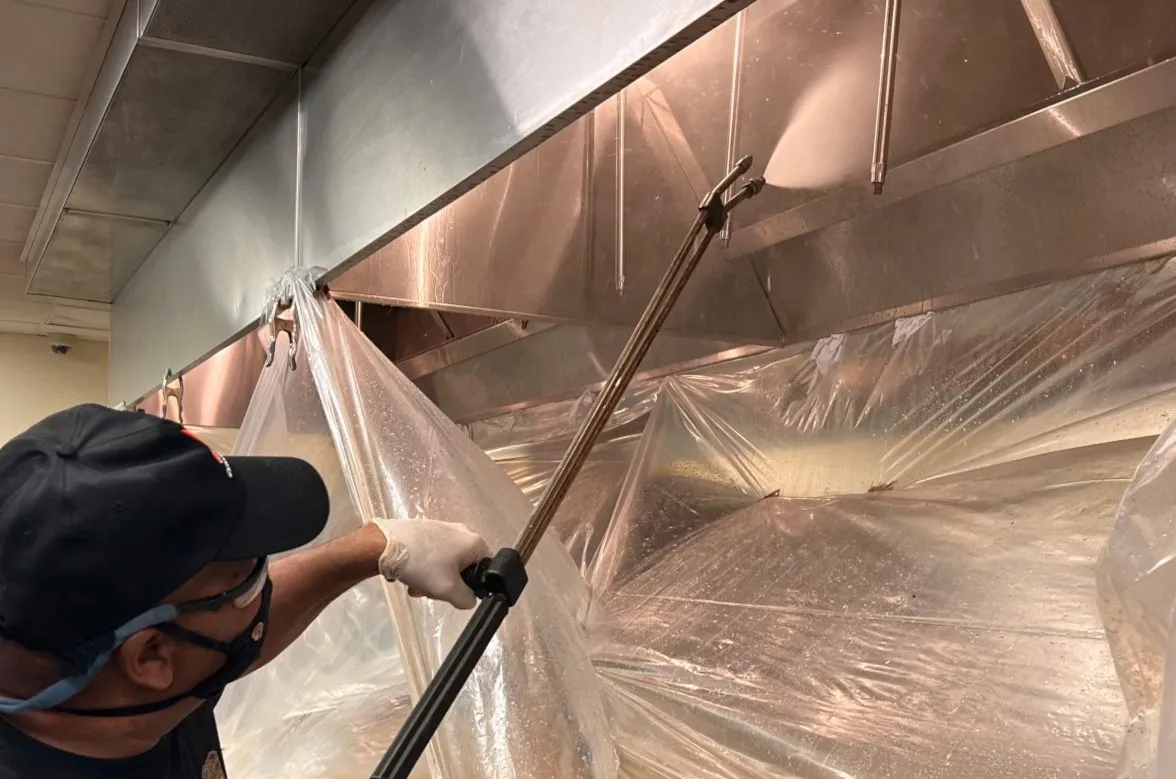
Complete cleaning of exhaust hood interiors, exteriors, and removable filters to remove accumulated grease. Filters are removed, soaked in degreasing solution, pressure washed, and thoroughly dried before reinstallation. Hood surfaces are scraped and cleaned to bare metal, removing all fire-hazardous grease deposits.
Ductwork Cleaning
Thorough cleaning of exhaust ductwork from hood to fan, accessing all horizontal and vertical runs. We use scraping tools, pressure washing, and specialized equipment to remove grease buildup from duct interiors. Access panels are installed where needed to ensure complete system cleaning and future serviceability.
Exhaust Fan Maintenance
Rooftop and inline exhaust fans are accessed, blades and housings are degreased, and motors are inspected. Fan belts are checked and adjusted, electrical connections verified, and overall fan condition assessed. Proper fan operation is essential for effective ventilation and code compliance.
Rooftop Grease Containment
Grease containment systems on rooftops are cleaned and maintained to prevent environmental contamination and fire hazards. We ensure containment devices are properly functioning and comply with EPA requirements for preventing grease discharge onto roofs and into stormwater systems.
Fire Code Compliance Service
Our cleaning protocols follow NFPA 96 standards and local fire code requirements. We understand the specific cleaning frequencies mandated by code based on cooking volume and type. Service is performed to standards that satisfy fire marshal inspections and insurance requirements.
Photo Documentation & Reporting
Complete before and after photo documentation provides visual evidence of cleaning thoroughness. Detailed service reports document areas cleaned, deficiencies noted, and certification of compliance. These records support your fire inspection preparation and insurance documentation needs.
Benefits of Kitchen Exhaust Cleaning
Fire Hazard Reduction
Grease accumulation in exhaust systems is a leading cause of restaurant fires. According to the National Fire Protection Association, cooking equipment is involved in 61% of restaurant fires, with failure to clean being a major contributing factor. Thorough exhaust cleaning removes this fuel source, dramatically reducing fire risk and protecting lives and property.
Fire Code Compliance
NFPA 96 and local fire codes mandate regular kitchen exhaust cleaning based on cooking volume. Failure to comply can result in fines, business closure, and liability exposure. Professional cleaning by certified technicians ensures you meet regulatory requirements and can demonstrate compliance during inspections.
Improved Ventilation Efficiency
Grease buildup restricts airflow through exhaust systems, reducing ventilation effectiveness. Poor ventilation leads to heat buildup, uncomfortable working conditions, and accumulation of cooking odors and smoke in dining areas. Clean systems operate at design efficiency, maintaining comfortable kitchen environments and proper air quality.
Insurance Requirement Satisfaction
Restaurant insurance policies typically require regular professional exhaust cleaning as a condition of coverage. Failure to maintain cleaning records can result in claim denials if fire occurs. Professional service with proper documentation ensures you meet insurance requirements and maintain coverage protection.
Extended Equipment Life
Grease accumulation causes corrosion, motor strain, and premature wear of exhaust system components. Regular cleaning removes these damaging deposits and allows inspection of equipment condition. This maintenance extends system life, reduces repair costs, and prevents unexpected equipment failures during busy periods.
Health Department Compliance
While primarily a fire safety issue, exhaust system condition also affects health inspections. Poor ventilation contributes to heat stress, inadequate air quality, and grease accumulation on surfaces. Clean exhaust systems support overall kitchen sanitation standards and health department compliance.
Our Kitchen Exhaust Cleaning Process
Pre-Service Inspection & Setup
Our certified technician inspects the exhaust system, identifies access points, evaluates grease accumulation, and determines appropriate cleaning methods. Kitchen equipment is protected with plastic sheeting, drop cloths are placed to catch debris, and necessary access panels are opened or installed.
Filter Removal & Cleaning
All baffle filters are carefully removed from the hood and transported outside or to a designated wash area. Filters are soaked in hot degreasing solution, pressure washed to remove all grease, rinsed thoroughly, and air dried. This process restores filter function and fire protection capability.
Hood Interior Scraping & Cleaning
Hood interiors, plenums, and accessible ductwork are scraped to remove heavy grease buildup. Special tools reach into corners and crevices where grease accumulates. Scraped grease is collected for proper disposal. Pressure washing or chemical cleaning follows scraping to remove remaining residue and leave surfaces clean to bare metal.
Ductwork Cleaning
Ductwork is accessed through existing openings or installed access panels. Scraping tools, rotary brushes, pressure washing, and vacuum systems remove grease from horizontal and vertical duct runs. We ensure complete cleaning from hood connection to fan inlet, addressing all areas where fire hazards exist.
Fan Cleaning & Inspection
Rooftop or inline exhaust fans are accessed and thoroughly cleaned. Blades, housings, and motors are degreased. Fan operation is tested, belts inspected and adjusted, and overall condition assessed. Any deficiencies are noted for your attention. Fan cleaning ensures proper airflow and prevents motor overheating.
Cleanup, Documentation & Certification
The kitchen is thoroughly cleaned of any debris or overspray from the service. Before and after photos are taken to document cleaning results. A detailed service report and certificate of compliance are provided for your records. Filters are reinstalled and the system is checked for proper operation.
Understanding the Fire Hazards of Grease Accumulation
NFPA 96 Standards and Code Compliance
The Kitchen Exhaust Cleaning Process and Technology
Kitchen Exhaust System Components and Maintenance Requirements
Frequently Asked Questions
How often does kitchen exhaust cleaning need to be performed?
NFPA 96 establishes cleaning frequencies based on cooking volume and type. Solid fuel cooking (wood, charcoal) requires monthly cleaning. High-volume operations like 24-hour restaurants need quarterly service. Moderate-volume cooking requires semi-annual cleaning, and low-volume operations like churches or seasonal facilities need annual service. Dallas Fire Code adopts these standards. We assess your specific cooking operations and recommend appropriate frequency to maintain compliance and safety.
What certifications should a kitchen exhaust cleaning company have?
Look for IKECA (International Kitchen Exhaust Cleaning Association) certification, which is the industry standard for kitchen exhaust cleaning professionals. IKECA-certified companies follow established standards, use proper techniques and equipment, and employ trained technicians. Membership in the National Air Duct Cleaners Association (NADCA) also indicates professional commitment. Proper insurance including general liability and workers compensation is essential. Ask for references from other restaurants they service.
Will kitchen exhaust cleaning disrupt our restaurant operations?
We schedule service at times that minimize operational impact, typically after closing or during prep hours before service begins. The kitchen cannot be used for cooking during cleaning due to equipment protection and safety requirements. Most services are completed in 2-6 hours depending on system size and condition. We work with your schedule to find the optimal service window. Emergency service is available if situations require immediate attention.
What happens if we don't clean our kitchen exhaust system regularly?
Neglecting exhaust cleaning creates serious consequences. Fire risk increases dramatically as grease accumulation becomes fuel for potentially devastating kitchen fires. Insurance claims may be denied if cleaning records cannot be demonstrated. Health and fire inspections can result in citations, fines, or mandatory closure until compliance is achieved. Poor ventilation creates uncomfortable, potentially dangerous working conditions. Equipment life is shortened due to grease-related corrosion and strain. The risks and costs of neglect far exceed the investment in regular professional cleaning.
Do you install access panels for duct cleaning?
Yes, when exhaust systems lack adequate access for thorough cleaning, we install code-compliant access panels at appropriate intervals. NFPA 96 requires access every 12 feet horizontally and at every change of direction. We install these panels as part of our service when needed, ensuring future cleanings can be performed effectively and that your system meets code requirements. Panel installation is discussed and approved before proceeding.
How do I know if my exhaust system needs cleaning?
Visible grease accumulation on hood filters, visible grease in ductwork visible through access panels, reduced airflow from exhaust fans, excessive heat in the kitchen, grease dripping from seams, or grease odors indicate cleaning is needed. However, waiting for visible signs means the system is already significantly contaminated. Following the NFPA 96 schedule for your cooking volume is the safest approach, as much of the fire-hazardous grease accumulation occurs in ductwork that cannot be seen during normal operations.
Related Services
Tile & Grout
Deep cleaning and restoration for commercial tile floors, walls, and grout lines.
Warehouse Cleaning
Industrial cleaning for warehouses including dust removal and debris cleanup.
Post-Construction Cleanup
Complete cleaning after construction, renovation, and remodeling projects.
Restroom Sanitation
Deep cleaning and disinfection services for commercial restrooms and washrooms.
Ready to Experience the Difference?
Contact us today for a free consultation and customized quote for kitchen exhaust cleaning.